

VHT 2025-26: Dhruv Jurel’s 160 vs Baroda adds a fresh dimension to India’s reserve wicketkeeper-batter options in ODIs.

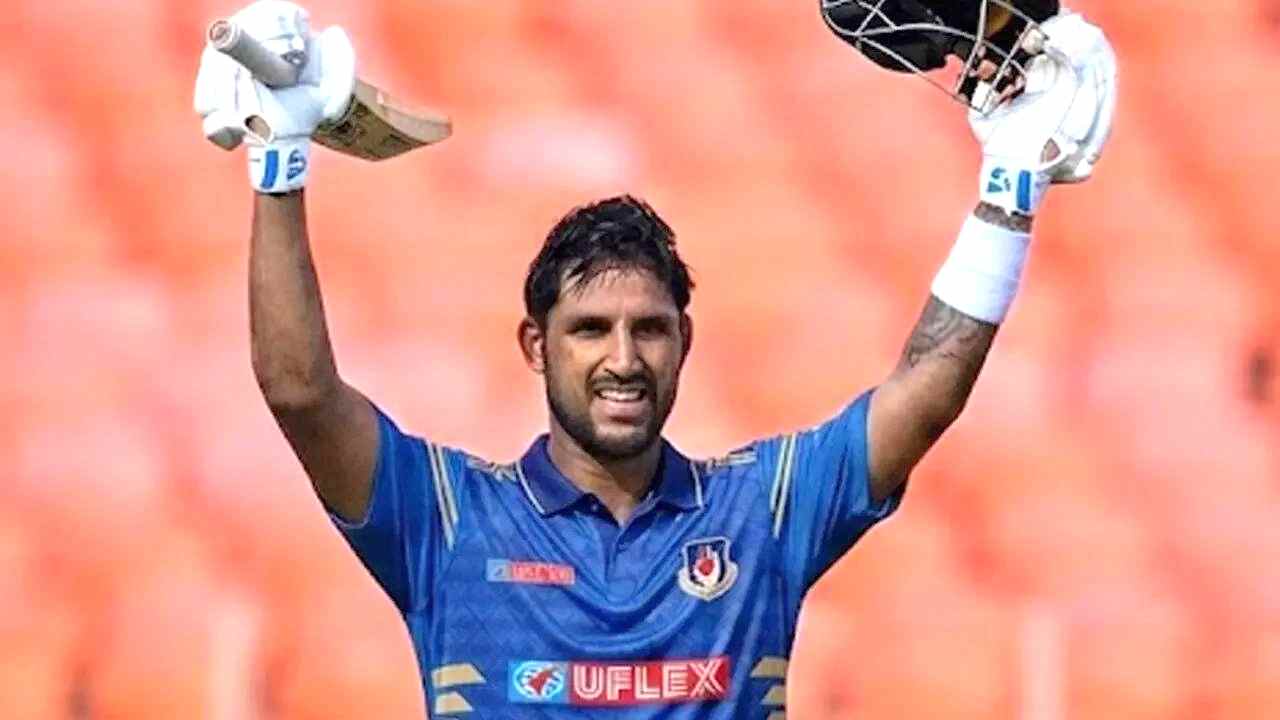
Dhruv Jurel’s unbeaten 160 off 101 balls against Baroda in the Vijay Hazare Trophy (VHT) 2025-26 does more than just light up a group-stage afternoon in Rajkot; it also opens a serious third angle in India’s reserve wicketkeeper-batter debate for ODIs. In a white-ball ecosystem where KL Rahul and Rishabh Pant dominate the conversation, Jurel’s timing, both of his strokes and his surge, could not have been better.
In VHT2025-26, Uttar Pradesh were already sitting pretty in Group B, but Jurel turned their Baroda clash into a personal statement innings. Walking in at No 3 in the 15th over at Sanosara Cricket Ground A, he batted through the innings for 160* off just 101 deliveries, lacing 15 fours and 8 sixes and finishing with a strike-rate around 158. His knock powered UP to 369-7 and set up a 54‑run win, underlining not just volume but match-defining impact.
It was his maiden List A hundred and also his third straight fifty-plus score in this VHT season, taking him to 307 runs in three matches at an average above 150. For a player branded early as a red-ball specialist after his Test exploits, this was the kind of white-ball innings that forces selectors to re-read their notes.
Read More: Has Dhruv Jurel cemented his spot as India’s second wicketkeeper-batter after Rishabh Pant?
Form across formats: not a one-off
The Baroda blitz fits into a broader pattern of Jurel being in good touch rather than an isolated purple patch. In the ongoing Vijay Hazare Trophy, he has piled up runs consistently at No. 3, showing he can both rebuild and accelerate.
Even before this innings, there was enough in his domestic and IPL T20 resume to suggest white-ball growth, rapid scoring in the death overs for Rajasthan in the IPL and the ability to clear the ropes without losing his shape.
For someone already trusted at No 3 in a competitive UP side, that combination of technique, range and temperament is exactly what ODI middle orders crave.
Also,if the white-ball numbers are starting to talk, his Test auditions have already shouted. Jurel’s early days in international cricket have showcased a player who understands situations, rather than just formats.
In his debut series against England in 2024, he made a polished 46 in Rajkot, looking entirely at home against a quality attack. In Ranchi, he produced a defining 90 in the first innings on a difficult surface and followed it with an unbeaten, nerveless 39 in the chase, steering India home and taking Player of the Match honours in just his second Test.
Those Test knocks have already proved that he can absorb pressure, farm the strike with the tail and construct innings when conditions and match situation are stacked against him. That same calmness, when paired with the explosiveness he showed versus Baroda, makes him a very different kind of wicketkeeper option in white-ball cricket.
Read More: Ishan Kishan slams fourth-fastest century in men’s List A cricket, coming in at no. 6 for Jharkhand
A crowded but fluid ODI WKB race
India’s white-ball wicketkeeping pecking order looks settled on paper, but has more moving parts than it appears. Rahul offers experience, stability and flexibility as a middle-order glue; Pant brings X-factor and left-handedness; Kishan has recently re-entered the frame with a weight of runs, especially in T20s.
Jurel’s advantage lies in the convergence of age, temperament and timing. At 24, he has the sort of runway that allows selectors to invest in a long-term project, particularly with Pant’s form oscillating and Rahul’s workload and fitness always under careful management. If India want an understudy who can both hold a chase together and clear the fence at the back end, Jurel suddenly looks far more than a red-ball insurance policy.
Learning from Kishan, eyeing ODIs
The Ishan Kishan template is instructive for Jurel. Kishan forced his way back into a T20 World Cup squad on the back of an unignorable domestic and IPL surge, stacking up runs until the debate became not “why him?” but “how do you leave him out?”.
Jurel’s VHT explosion is a similar kind of loud knock on the door; the challenge now is to stack seasons, not just one campaign, across both List A and T20 cricket. If he can back this up and continue evolving in the IPL, tightening his wicketkeeping, sharpening his death-overs hitting, his name will inevitably sit in selection meetings as the next reserve option in ODIs.
Yes, he can represent India in white-ball cricket; the question is less about ability and more about timing, volume of runs and the specific balance India seek.
Read More: Vaibhav Suryavanshi becomes youngest centurion in men’s List A cricket; slams 84-ball 190 for Bihar


