
Team India still haven’t found a settled No. 3 in Tests — time to look for other options who can fit the role?

The No. 3 position in Test cricket has traditionally been one of Team India’s most stable and dependable slots. For nearly a decade, Cheteshwar Pujara owned that role with his solid technique and temperament. But since his departure, India have been unable to identify a consistent successor. The team has entered a phase of continuous experimentation, trying multiple players without finding a long-term solution. This instability is now reflected sharply in the numbers as well.
Since the start of the ICC World Test Championship in 2019, India’s No. 3 has averaged only 21.86 in first innings across 37 innings, the second-worst among all Test-playing nations, better only than West Indies’ 10.45. The position that once symbolized solidity has turned into India’s most unsettled batting spot.
India’s heavy experimentation at No. 3
Over the last couple of years, India have tested a long list of players to fill the No. 3 vacancy. Sai Sudharsan has been at the forefront of this experimentation. He was used in England, again later against West Indies in India, and in other series whenever Shubman Gill wasn’t available. Despite repeated backing, he has been unable to produce a defining innings. Across nearly 10 attempts at No. 3, he still hasn’t scored a single Test hundred and has only a couple of memorable fifties to his name.
Washington Sundar was also tried at No. 3, although he is not a specialist top-order batter. His opportunity lasted only one match and did not provide clarity. Karun Nair too was pushed into that role, but while technically sound, he lacked the impact required from a No. 3 and failed to make a convincing case. The constant chopping and changing reflects India’s growing uncertainty about the position.
Read More: Factors that have caused decline in India’s batting in home Tests
How India’s No. 3 has fared compared to the world
Performance of No. 3 batters in the World Test Championship (First Innings, 2019–2025):
| Team | Players | Matches | Innings | Runs | Avg | 100s | 50s |
| NZ | 3 | 17 | 17 | 1345 | 79.11 | 6 | 2 |
| Australia | 3 | 36 | 36 | 2121 | 58.91 | 8 | 7 |
| England | 9 | 33 | 33 | 1407 | 42.63 | 5 | 3 |
| Pakistan | 4 | 21 | 21 | 847 | 40.33 | 2 | 5 |
| BAN | 2 | 17 | 17 | 608 | 38.00 | 2 | 1 |
| SA | 10 | 23 | 23 | 747 | 32.47 | 2 | 2 |
| SL | 4 | 23 | 23 | 716 | 31.13 | 1 | 5 |
| India | 7 | 37 | 37 | 809 | 21.86 | 0 | 6 |
| WI | 7 | 11 | 11 | 115 | 10.45 | 0 | 1 |
This data highlights India’s crisis emphatically. With only 809 runs in 37 innings, India’s average of 21.86 at No. 3 stands nearly 60 runs lower than New Zealand and 37 runs behind Australia. The absence of a single century in this period reflects not just inconsistency but a complete lack of dominance from a position meant to control the innings.
Why the current options haven’t worked
Sai Sudharsan has been the most extensively tested, but despite the management’s patience, he has not shown the ability to convert starts into big knocks. He often looks compact early on but hasn’t delivered the “statement innings” expected from a long-term No. 3. With nearly a dozen tries and no century, India may have reached the point where moving on is necessary.
Karun Nair brings experience but lacks the rhythm required at this position. Washington Sundar, though talented, is not the profile India wants for such a technical and high-responsibility role.
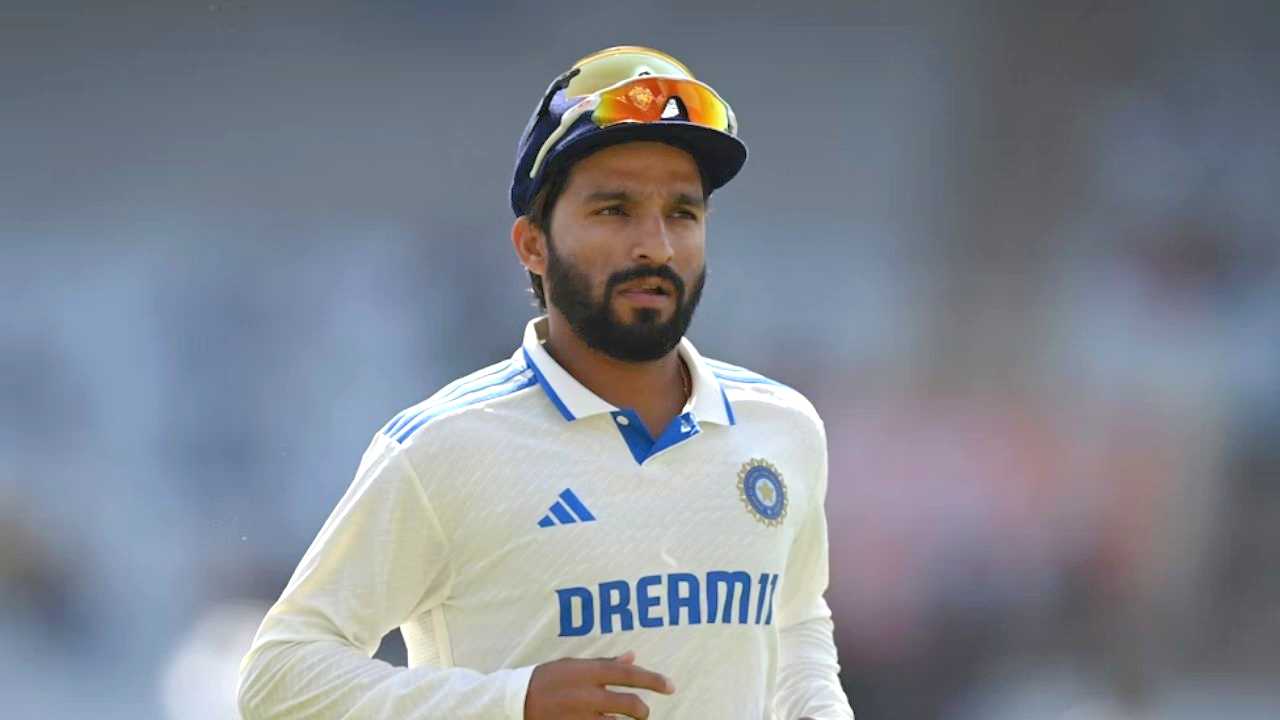
Devdutt Padikkal entered the Test scene with promise, but his early opportunities haven’t been convincing either. His outing against South Africa, where he failed to provide a stable start, left doubts about whether he has the defensive game for early overs in red-ball cricket. However, his first-class average of 41+ keeps him in the discussion.
Read More: Kolkata Test loss shows India didn’t learn anything from home series loss against NZ in 2024
The case for new contenders
With Sudharsan failing to lock down the spot and others not making the most of their chances, it is time for India to seriously explore alternative candidates.
Ruturaj Gaikwad enjoys batting against the new ball, has a calm temperament, and possesses strong technical foundations traits that translate well to No. 3 in Tests.
There is also an interesting development involving Sarfaraz Khan, who is reportedly preparing to bat higher in the order for Mumbai, possibly even opening. If he succeeds in domestic cricket at No. 3 or higher, his ability to score big runs could make him a strong contender.
Rajat Patidar is another name who deserves serious consideration. His recent red-ball form has been excellent, and he has shown the ability to play long, composed innings under pressure.
Why No. 3 matters more than ever
The No. 3 position is the backbone of any Test batting lineup. This player often walks in early against the new ball, sets the tone, and anchors both the rebuilding and acceleration phases. Instability at this position doesn’t just affect one batter – it disrupts the entire batting structure. India once enjoyed remarkable strength here with Rahul Dravid and Cheteshwar Pujara, but the contrast now is stark.
A needed shift in approach
India have provided Sai Sudharsan enough time nearly 10 innings including a tour of England, yet he hasn’t produced a standout performance. The team must now broaden its vision and give the same amount of confidence to another player in the queue. Whether it is Gaikwad, Patidar, Padikkal or eventually Sarfaraz moving up, India must commit to a clearer, long-term plan. The experimentation phase has been long enough, and India cannot afford prolonged uncertainty in a new WTC cycle.
With the second Test ending on 26 November, India now move to white-ball series, a three-match ODI series vs South Africa from 30 November to 6 December, followed by a five-match T20I series from 9 to 19 December. With no Test cricket immediately lined up and a long white-ball stretch ahead including upcoming series against New Zealand and England India have a valuable window to reassess their Test plans. This extended break before the next Test series gives the management the ideal opportunity to deeply re-evaluate the No. 3 position and identify a stable, long-term solution.
Read More: Reasons why India batters find themselves vulnerable against spin in the current era

