

Virat Kohli and Rohit Sharma could face reduced earnings if BCCI follows through with plans to eliminate the A+ grade.

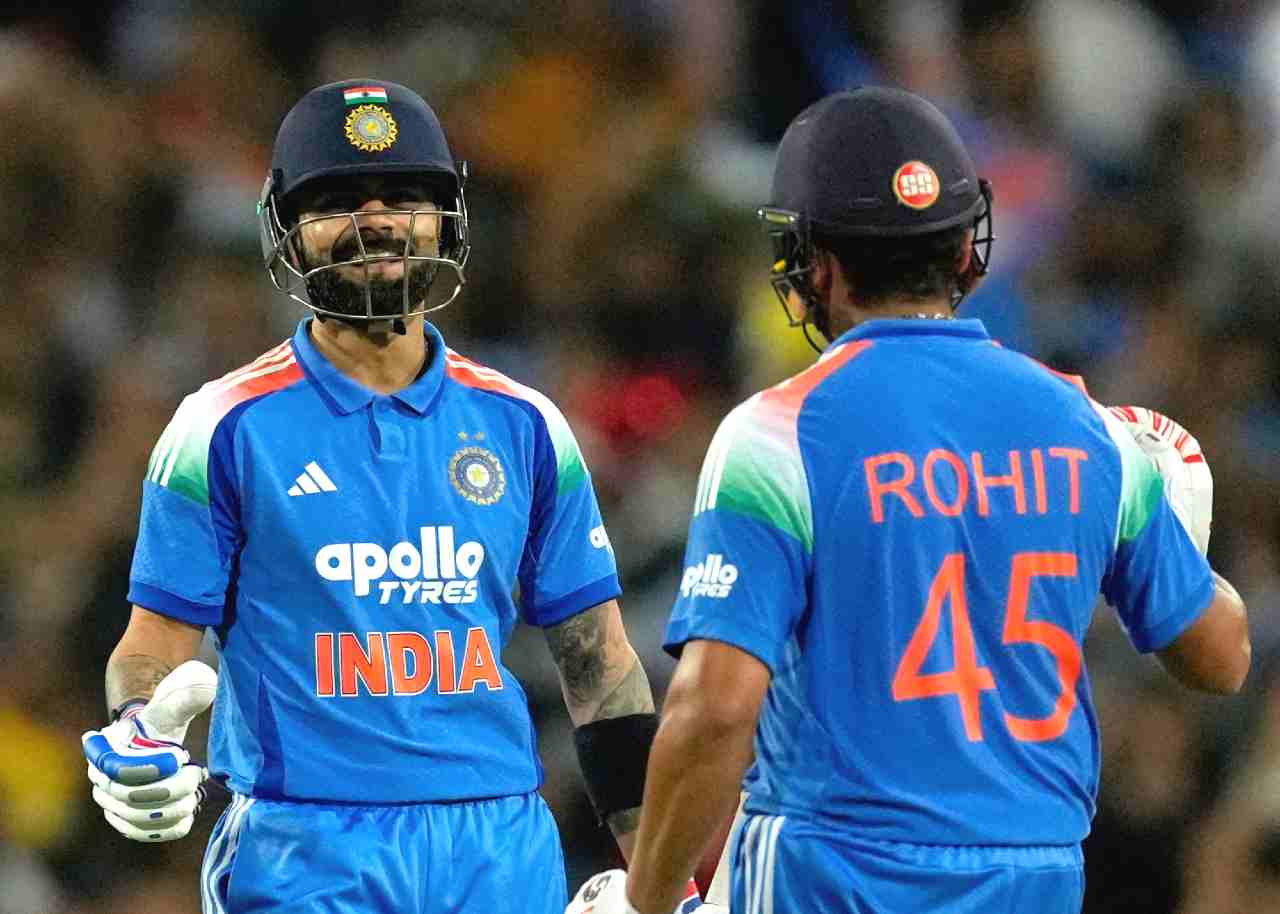
Virat Kohli and Rohit Sharma may be heading for central contract pay cuts. The BCCI selection committee is reportedly proposing to scrap the elite A+ grade and move them into lower brackets as part of a broader reset of India’s retainership model, according to a report by news agency ANI.
As per the report, the Ajit Agarkar-led selection committee has recommended a major overhaul of the men’s central contracts, including the abolition of the A+ category, which currently pays INR 7 crore annually. Under the existing structure, Grade A+ pays INR 7 crore, Grade A INR 5 crore, Grade B INR 3 crore, and Grade C INR 1 crore as annual retainers.
If A+ is scrapped, Rohit and Kohli, currently in that top bracket along with Jasprit Bumrah and Ravindra Jadeja, are expected to be placed in Grade B.
Read More: BCCI hikes match fees for women’s domestic cricketers
Why could A + be scrapped?
The key idea behind the proposal is to align remuneration more closely with format-wise availability and match participation across the year.
The A+ bracket was originally conceived for all-format workhorses–players who consistently featured in Tests, ODIs, and T20Is, logging high volumes of international cricket in a 12-month cycle.
With senior stars like Rohit and Kohli having restricted themselves to ODIs and stepping back from T20Is and Tests, the selectors’ logic is that they no longer fit the original “all-format, all-year” A+ profile, even if their stature and impact remain enormous.
The proposal also seeks a more rational spread of payments, with only three effective slabs (A, B, C) and clearer criteria based on matches played and availability, rather than a premium ‘super bracket’ for a select few.
From this lens, dropping A+ or moving current A+ players down the ladder is presented as a structural correction rather than a comment on greatness or legacy.
Read More: Holes India need to plug & changes they need to make in ODI side after series loss against NZ
Impact on Virat Kohli and Rohit Sharma
If approved, the change would almost certainly mean a pay cut for both Rohit Sharma and Virat Kohli at the retainer level. Moving from A+ (INR 7 crore) to a reworked top slab in the INR 3–5 crore region would mean a notional reduction of around INR 2–4 crore a year in guaranteed BCCI salary, depending on which exact grade they are slotted into once the new framework is finalised.
However, this retainer is only one slice of their overall earnings; Kohli and Rohit remain among India’s strongest commercial brands, earning significantly through IPL contracts, endorsements, and appearance fees, which cushions the blow financially even if the move is symbolically significant.
The broader message is about accountability to formats and availability: if a player is only turning out for India for a limited number of days in the year, their central retainer is expected to reflect that workload, regardless of past contribution.
In that sense, a shift from INR 7 crore to something around the ₹INR 5 crore band can be framed as a logical recalibration tied to the volume of cricket played, not a disrespect to their stature.
Read More: Ro-Ko limitless after limiting themselves to single format
ODI revival Rohit-Kohli powered
Any discussion on their possible downgrade must also acknowledge how Rohit and Kohli have almost single-handedly driven a fresh wave of interest in ODI cricket over the last couple of years.
India’s ODIs at home involving Rohit and Kohli have seen consistently strong stadium turnouts, especially around the 2023 World Cup cycle and subsequent high-profile bilateral series, at a time when many global ODI fixtures elsewhere struggled for crowds and buzz.
For many fans, the lure of “you never know when it might be their last ODI together” has turned bilateral ODIs into must-watch events again, particularly in major Indian centres. This intangible value, eyeballs, gate receipts, broadcast ratings, is precisely what makes the conversation around their “demotion” more nuanced than a straight financial story.
Massive traffic jams 8-10 kms from the stadium in Vadodara. On the road for an hour and 10 mins already. Sell out game. And what were we saying about ODI cricket?
— Harsha Bhogle (@bhogleharsha) January 11, 2026
Balancing revenue, legacy & fairness
The proposed move, if cleared by the BCCI Apex Council, ultimately asks a tough question: should central contracts primarily reward availability and multi-format workload, or should they also formally account for star power and the revenue and relevance that come with it?
On one hand, a more performance-and-availability-linked structure appears fairer to the wider pool of players who grind across formats and tours, and sends a clear message that no one is exempt from evolving criteria, not even the biggest names.
On the other, the value Kohli and Rohit bring in terms of ticket sales, broadcast draw, global visibility, and the evident ODI revival in India is difficult to quantify purely through match counts, strengthening the case for a nuanced top bracket in some form.
Read More: Exclusive domain of Ro-Ko: They have given lease to ODI format two months ahead of a T20 World Cup


