
Should ICC move beyond fixed India vs Pakistan clashes? A random draw system could enhance unpredictability and overall tournament quality.
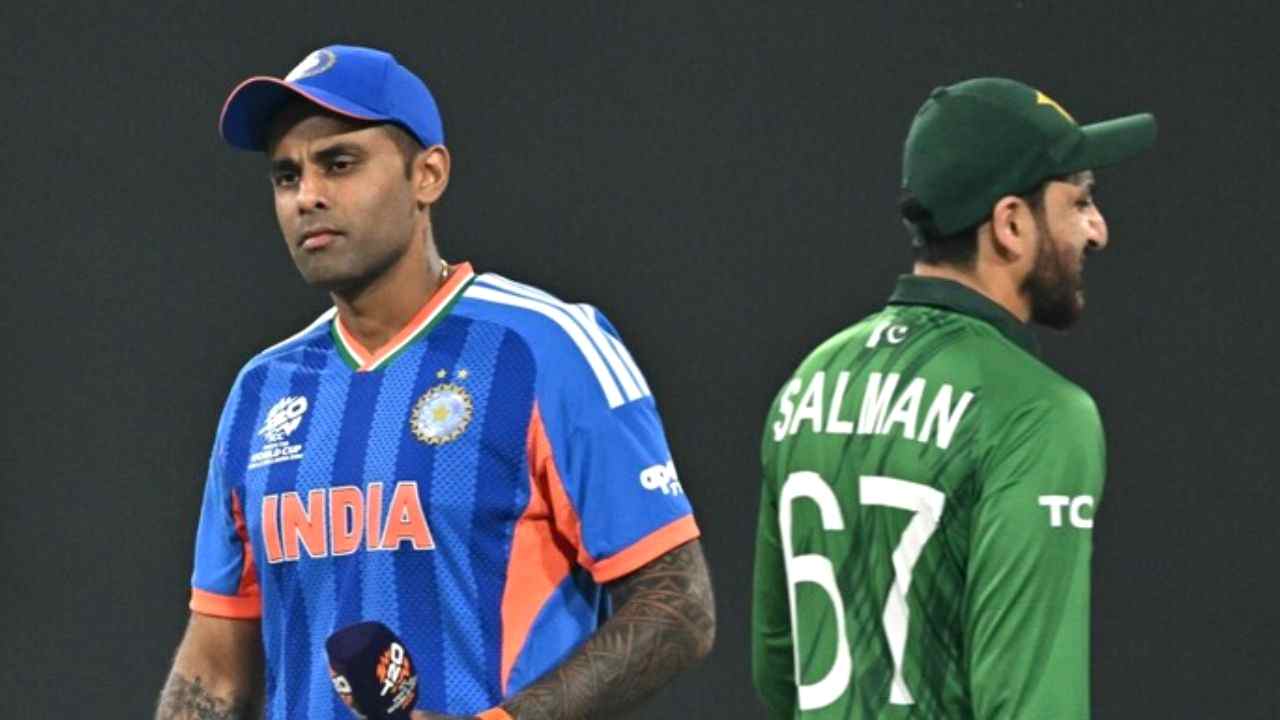
The India vs Pakistan rivalry remains one of the most powerful narratives in world sport. But in the T20 World Cup, the numbers now tell a story that raises an uncomfortable question: Is the contest still competitive enough to justify placing the two teams in the same group every tournament?
India’s dominance in the T20 World Cup editions has become overwhelming. The two sides have now met nine times in the history of the men’s T20 World Cup, with India leading 8–1.
Pakistan’s only win came in 2021 in Dubai, while India have won every other encounter, including recent editions in 2022, 2024, and 2026.
In isolation, rivalries do not need to be balanced to remain compelling. But when one side repeatedly dominates in global tournaments, the competitive edge that defines great sporting rivalries begins to fade.
Read More: T20 World Cup 2026, IND vs PAK: Kishan smothers Pak’s hyped spin attack; India through to Super 8
Rivalry built on history & revenue
There is no denying why the ICC continues to ensure India and Pakistan meet regularly in global events.
The rivalry is cricket’s biggest commercial attraction. Broadcasters, sponsors, and host venues rely heavily on the fixture’s global appeal. Reports suggest that an India–Pakistan match is central to the financial success of ICC tournaments, with administrators acknowledging that the fixture drives broadcast revenue, sponsorship value, and ticket demand.
In one recent instance, the possibility of the match not taking place risked an estimated $174 million in revenue, underlining how economically significant the fixture has become.
With bilateral cricket between the two nations absent since 2013, ICC tournaments have effectively become the only stage for the rivalry. That scarcity increases demand, and explains why tournament draws often appear designed to guarantee at least one meeting. But commercial logic does not always align with competitive integrity.
When predictability replaces rivalry
The India–Pakistan fixture still generates enormous anticipation, but results in T20 World Cups increasingly feel predictable.
India’s recent performances highlight the widening gap between the sides. Their recent 61-run win, another commanding victory, reinforced the growing imbalance in quality, depth, and tactical clarity between the teams. Former Pakistan players have openly expressed concern about the team’s decline, with criticism growing after repeated defeats in global tournaments.
A rivalry thrives on uncertainty. When outcomes become routine, the spectacle risks becoming symbolic rather than competitive.
Read More: T20 World Cup 2026: Pakistan withdraws boycott of Colombo fixture with India
Oversaturation in ICC events
Another issue is frequency. Despite not playing bilateral cricket, India and Pakistan have met more than 20 times in ICC and multi-nation tournaments since 2013, raising concerns about overexposure.
With T20 World Cups now held every two years, coupled with ODI World Cups and Asia Cups, the rivalry appears regularly on the cricket schedule. What was once a rare and electric spectacle now risks becoming predictable.
Ironically, the attempt to preserve the rivalry’s value may be reducing its competitive significance.
Why could random draws improve competition?
A truly random group draw would serve several purposes. First, it would restore competitive balance. If India and Pakistan meet less frequently in group stages, the possibility of a knockout encounter becomes more meaningful, much like the semi-final clash in the 2011 ODI World Cup, which remains one of cricket’s most memorable matches.
Second, it would strengthen the tournament itself. Instead of relying on one marquee fixture, ICC events would encourage new rivalries and unpredictable narratives, something T20 cricket thrives on.
Third, it would protect the integrity of tournament structures. Fans increasingly recognise when commercial priorities influence scheduling, and transparency in draws would reinforce trust in the competition.
Most importantly, great rivalries should feel earned, not scheduled.
Biggest question for ICC
India vs Pakistan will always remain cricket’s most emotionally charged contest. That will not change. But the ICC must balance commercial certainty with competitive credibility. When one team leads 8–1 in T20 World Cups, repeatedly placing them in the same group risks turning anticipation into inevitability.
A random draw would not diminish the rivalry. If anything, it could restore its edge, making the next India–Pakistan meeting feel like an event again, rather than a scheduled obligation. And in sport, uncertainty is what keeps rivalries alive.
Read More: With T20I cricket being part of Olympics in LA28, shouldn’t T20 WC be spaced out over 4 years?

