

The Eden Gardens heist turns 25: How India scripted a historic comeback to defeat Steve Waugh’s mighty Australians at Eden Gardens in 2001.

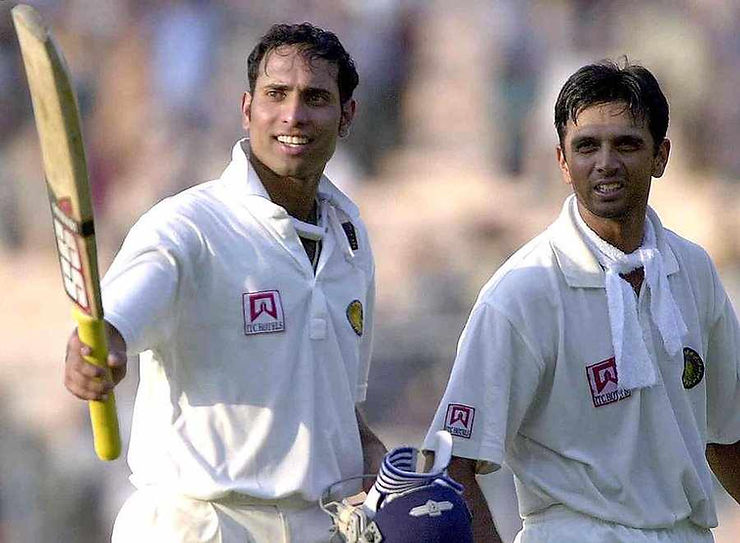
In March 2001, Team Australia, captained by Steve Waugh, arrived at the shores of Kolkata to face Team India, and what followed over the next five days redefined the meaning of resilience. The Australian side had set a historic record of a 16-match winning streak in test cricket, and the Indian side at the time was merely surviving in the format.
The Invincibles Strike First
Australia arrived on the crease with an overwhelming line-up and started to dominate India’s bowling attack. At the end of the first innings, the Aussies had scored 445 runs. Though Harbhajan Singh was relentless and effective, Team India’s bowling attack failed to stop the opposition; balls were racing to the fence, and the scoreboard kept ticking. It was all up to the batters to turn the tables around for the team, but they failed to do so against the formidable bowling attack of the opposition. Team India was all out for 171 in the first innings, trailing by 274 runs. India was forced to follow or face an innings defeat at home. After the first innings, it seemed certain that the Aussies would secure the win and extend their winning streak to 17.
The Masterclass: A Partnership for Ages
Facing the follow-on, the India openers came out to bat with an aggressive approach but gave away wickets very early in the game. At this point, the team needed a turnaround and someone to handle the pressure and deliver an outstanding performance. Captain Ganguly made a decision that not only changed the game in their favour but also turned this match into the greatest test match ever played. In a tactical masterstroke, VVS Laxman, who was sent at sixth position, was sent to bat at number three, considering his response to the Aussie bowling attack in the first innings, and Rahul Dravid was sent at sixth position.
The Laxman-Dravid partnership in this Test became a textbook example for young players in the red-ball format. On Day 3, the pair established the crucial groundwork to avert an innings defeat. A marathon of concentration followed the fourth day, technique and sheer endurance. Shane Warne, who is among the best spinners in the world, was ineffective against this duo. This team marked the golden era of Australian bowling, featuring world-class bowlers like Shane Warne, Glen McGrath, Jason Gillespie, and Michael Kasprowicz. Still, none of them was able to break the partnership of VVS Laxman and Rahul Dravid. This, in turn, laid the groundwork for a mammoth of 657-7.
Read More: Who are the best India batters in Tests in England in the 21st century
Harbhajan Singh’s Final Say
Australia were given the target of 335 on the last day. It was time for Team India’s bowling side to take the reins, and Harbhajan Singh stepped up to put an end to the win streak of the visitors. The established match winners like Justin Langer, Mathew Hayden and Michael Slater failed against the young, resilient off-spinner. Harbhajan took advantage of the deteriorated, dusty, rough patches on the final day to deliver immense turn and precise tactical deliveries, resulting in failed sweeps by the batters. The dramatic sight of Steve Waugh’s invincibles failing to face the young off-spinner from Team India put an end to the win streak of the visitors.
Records Book Rewritten
The 2001 Eden Hesit was not just a dramatic victory for Team India; it rewrote the record books.
- Till now, 2,616 test matches have been played, and there have been only four wins after a follow-on has been forced on a team, and this was the third win in the history of test cricket.
- In 2001, VVS Laxman’s knock of 281 was the highest score by an Indian in a test match at the time, surpassing the legend Sunil Gavaskar’s 236 not out.
- During the first innings, Harbhajan Singh carved his name as the first Indian bowler to take a hat-trick in a test match.
- This win over Steve Waugh’s invincibles put an end to their 16-game win streak.
- VVS Laxman and Rahul Dravid’s 376-run partnership has remained as Team India’s highest for the fifth wicket in tests.
The Legacy
The outcome of this match was not limited to this series; it served as a catalyst for the Indian team’s approach to test cricket. The resilience and determination to win the match changed the team’s outlook, boosting their confidence in winning against any opposition under any pitch conditions. This win extended beyond Team India to the youngsters who would later shape cricket’s history. This shed India’s underdog status and turned it into the dominant force it has become today. The ‘Eden Heist’ is a chapter in Indian cricket that must be visited multiple times to understand how grit and sheer determination can conquer any invincibles.
Read More: Could Joe Root topple Sachin Tendulkar’s record in Tests?


