
Team India’s T20I balance suffers as Jitesh Sharma struggles as a finisher and Shivam Dube doesn’t fit the No. 8 role.

The search for a reliable T20I finisher and a genuine no 8 all-rounder is still not over for Team India, as Jitesh Sharma and Shivam Dube certainly do not look like the best outcome of the experiment. The early evidence against South Africa suggests both roles remain unresolved. With the 2026 T20 World Cup less than two months away and only a handful of games left, the timeline to get these calls right is brutally short.
Jitesh Sharma: Finisher in theory, not yet in practice
Across his short T20I career, Jitesh Sharma’s numbers tell a story of intent without defining impact. He has played only a handful of T20Is for India (11 innings), scoring 162 runs with a strike rate of 151.40 and a best score of 35, yet to score a half-century. The strike-rate backs the reputation he built in the IPL as a lower-order batter, yet the sample size is small and lacks a marquee game where he has dragged India over the line from a tricky situation.
Against South Africa in the first two T20Is of the 2025-26 series, that gap between potential and product was visible. In Cuttack, India posted 175 and then blew South Africa away for their lowest T20I total, meaning the “finishing” job barely existed. Jitesh came and went without being asked to close out a chase or construct a death-overs assault with the game in balance.
In the second T20I at Mullanpur, India were outplayed; the match situation demanded consolidation and then acceleration, but Jitesh could not produce the kind of counterpunch that shifts momentum, contributing little with the bat even as he shone with a Dhoni-esque run-out of Quinton de Kock behind the stumps.
Jitesh is a high-intent player who clears the ropes for his IPL side (and is exactly the kind of designated finisher who could thrive at RCB in Chinnaswamy conditions), but one who has not yet stamped his authority in blue.
In IPL and SMAT cricket, Jitesh’s strike-rate and boundary frequency clearly justify his “finisher” tag, yet for India, he has not produced even one definitive chase-closure or late-overs cameo that flips a match on its head. This is still early in his international career, and judging a player with a ‘finisher’ tag based on 11 innings is not justice, but India’s problem is structural. There is very little time left to keep hoping that roles will settle on their own before the 2026 World Cup.
Read More: Time for India to rope in in-form opening partner for Abhishek Sharma in T20Is
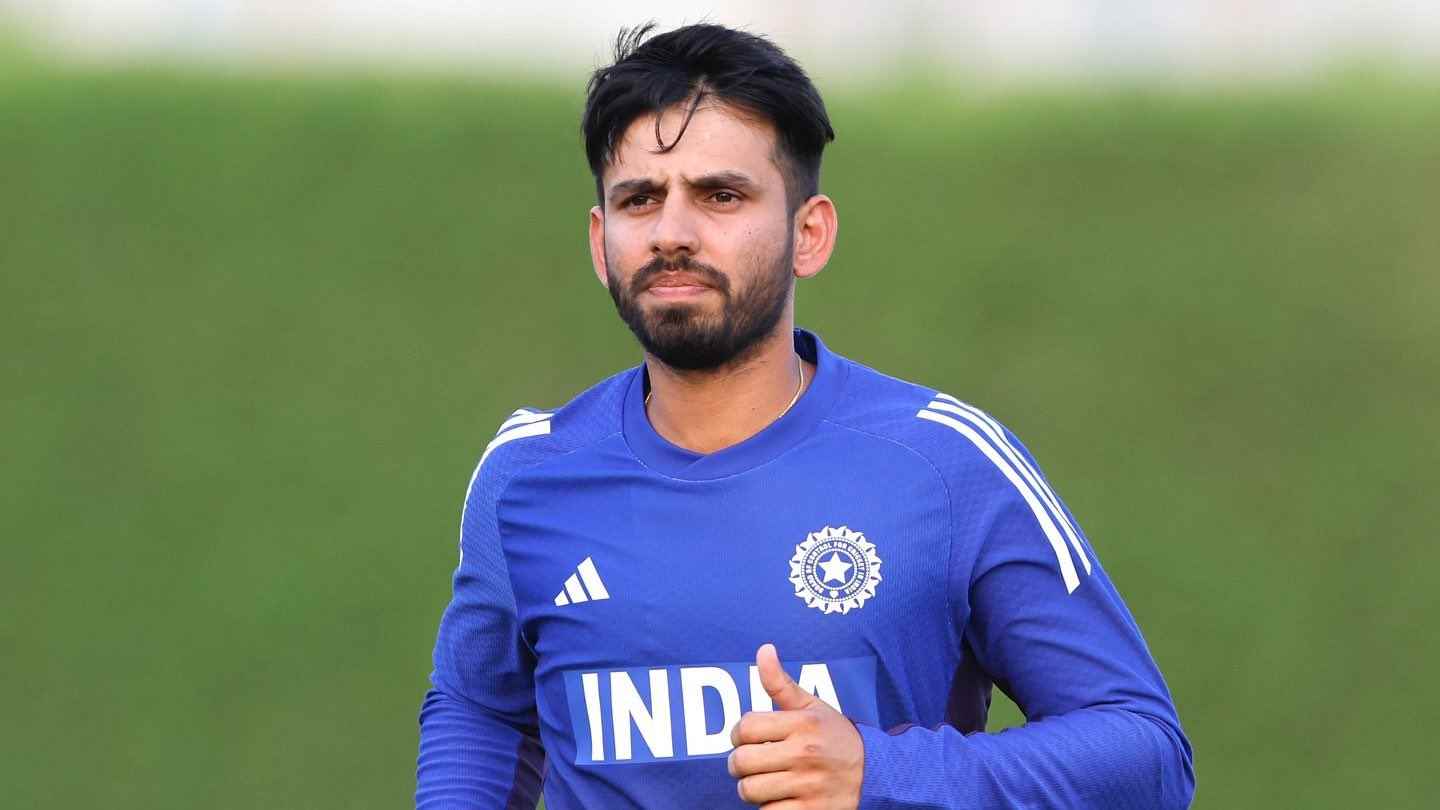
Shivam Dube: Miscast as a no 8
Shivam Dube’s case is slightly different. India know what he is, but seem determined to use him as something else. Over his T20I career, Dube has scored 619 runs across 34 innings at a strike-rate of 137.55, with four fifties and several cameos that underline his clean hitting once he has faced a dozen balls. With the ball, he has taken 22 wickets in 33 innings, at an economy rate of 9.23 and functioning more as a sixth-bowling option than a banker.
That profile screams “batting all-rounder at No 5-6” rather than a specialist No 8. A No. 8 in modern T20I cricket is effectively a bowling all-rounder who can hit from ball one and bowl his full quota if needed; Dube is neither a death-overs slogger by instinct nor a dependable four-over seamer.
He likes a few sighters, builds into his innings, and then unleashes, something Chennai Super Kings exploited by giving him time in the middle overs rather than dumping him into the last 12 balls. When India push him down to eight, they are asking him to become a different player – 10 off 3, 20 off 8, with the ball available as a safety net rather than a primary skill.
Against South Africa in the first two T20Is, that miscasting showed. With India dominating the first game, his role with bat and ball was marginal; in the second T20I, where South Africa dominated, Dube neither imposed himself with the bat nor offered the control you need from your No. 8 seam option. The result is a floating, fuzzy role. Sometimes a floater in the middle overs, sometimes a lower-order hitter, sometimes the sixth bowler. The numbers do not justify this confusion; his T20I strike-rate and four fifties indicate genuine batting utility, but his bowling returns and economy make him an unreliable first-choice seam option in a high-stakes tournament.
Read More: South Africa series last chance for India to figure out their combination ahead of T20 WC 2026
India’s experimentation vs World Cup reality
The larger issue is not just about Jitesh Sharma and Shivam Dube. It is about what their usage says of India’s planning for the 2026 T20 World Cup. A finisher who has not yet finished games for India and a batting all-rounder miscast as a No. 8 are symptoms of a team trying to solve structural issues with short-term patches. India are still juggling combinations, trying to fit in multiple keepers, two all-rounders, and late-order hitters, when the World Cup is close, with only three more T20Is against South Africa and a single series against New Zealand left to lock in their core.
Read More: Suryakumar Yadav has been decent with the bat in SMAT 2025-26, but India need him to contribute more

