
With a strike rate of 26.31 in overs 1–10, Arshdeep Singh leads all active Indian pacers in ODI powerplay impact.

After emerging as India’s highest wicket-taker in T20Is, Arshdeep Singh is gradually making inroads into the 50-overs format. He has featured in just 15 ODIs since his debut in 2022 but has already made a strong impression as a powerplay strike bowler. Among active India pacers with a minimum of 10 powerplay wickets in ODIs, Arshdeep boasts the best strike rate of 26.31, meaning he requires the fewest deliveries to claim a wicket in the first 10 overs.
Besides, Arshdeep also boasts the best bowling average in the powerplay in ODIs (20.54), meaning he concedes the fewest runs per wicket during the first 10 overs. Mohammed Siraj follows next, with a strike rate of 29.40 and an average of 22.57.
Here’s the full list of India pacers with the best powerplay strike rates in ODIs since Arshdeep made his debut in 2022.
| Players | Strike Rate | Average | Wickets | Economy | Innings |
| Arshdeep Singh | 26.31 | 20.54 | 13 | 4.68 | 14 |
| Mohammed Siraj | 29.40 | 22.57 | 30 | 4.61 | 35 |
| Mohammed Shami | 31.06 | 24.88 | 17 | 4.81 | 26 |
| Jasprit Bumrah | 38.18 | 23.18 | 11 | 3.64 | 16 |
*Minimum 10 wickets
Read More: ODI cricket: What are the observed & expected consequences of usage of one ball after 34th over?
Skills, discipline & game awareness: Arshdeep’s mantra
Left-arm pacer Arshdeep Singh is highly skilled with the new ball, as he can swing it both ways with minimal changes in grip or action. His ability to bring the ball back into right-handed batters remains his biggest weapon. Arshdeep is also consistently accurate with his line and length, rarely giving opponents the room to free their arms and play their shots. As a result, batters are often forced to take extra risks against him, which frequently leads to their dismissal.
Besides, Arshdeep also sets up batters brilliantly. After bowling a few outswingers to right-handers from over the wicket, he brings the ball back in to trap the batter plumb in front or shatter the stumps. As a result, his new-ball skills prove extremely handy in picking up early wickets and giving the team an immediate advantage.
Arshdeep’s best performance as strike bowler in powerplay
In the Johannesburg ODI against South Africa in 2023, Arshdeep tore through the batting line-up inside the first 10 overs. He claimed four powerplay wickets to leave South Africa reeling at 52/4. All four dismissals were either bowled, LBW, or caught behind, as Arshdeep proved unplayable due to the sharp swing he generated. He eventually finished with figures of 5 for 37 as South Africa were bowled out for 116 in the 28th over. India then romped home by eight wickets with 33 overs to spare.
Read More: Why India’s bowling attack is a powerhouse in ODI middle overs?
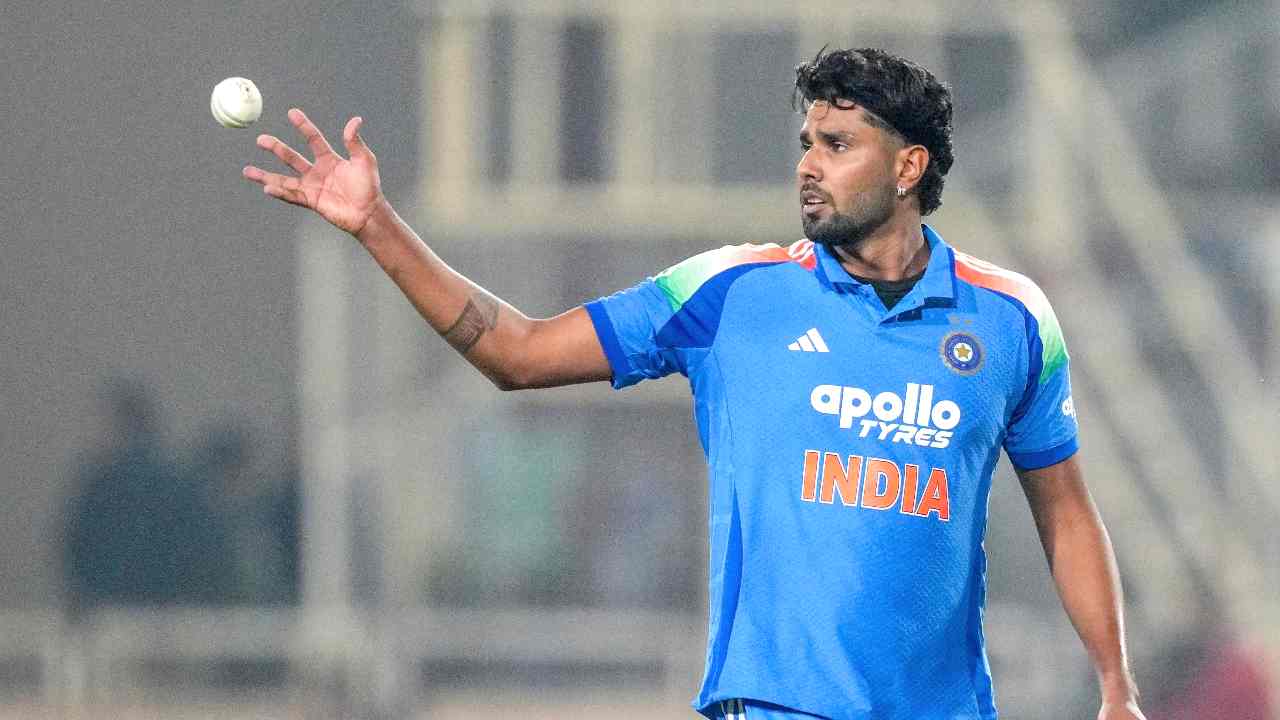
Middle-overs: Arshdeep’s unresolved test
Arshdeep’s skills with the old ball remain a point of concern, as he has not bowled extensively in the middle-overs. Even when he has operated during the 11–40 over phase, he has recorded the worst strike rate among active India pacers since making his ODI debut.
Here’s how India pace bowlers fare in middle-overs since Arshdeep’s debut.
| Player | Strike Rate | Average | Wickets | Economy | Innings |
| Mohammed Shami | 20.10 | 16.30 | 20 | 4.87 | 24 |
| Harshit Rana | 21.69 | 23.08 | 13 | 6.38 | 14 |
| Mohammed Siraj | 28.62 | 24.50 | 16 | 5.14 | 28 |
| Jasprit Bumrah | 31.83 | 28.83 | 6 | 5.43 | 13 |
| Arshdeep Singh | 72.00 | 67.00 | 3 | 5.58 | 12 |
*Minimum 10 innings
Arshdeep not only has the worst strike rate (72) and average (67) in the middle-overs, but has also taken the fewest wickets (three) among his teammates since making his ODI debut. This could be because captains prefer to preserve his overs for the death rather than use him extensively in the middle phase. Even when he is given an over or two, it is often insufficient for the left-armer to settle into a rhythm and strike immediately.
In comparison, Harshit Rana, who made his debut after Arshdeep, has claimed 13 middle-overs wickets at an impressive strike rate of 21.69 and an average of 23.08. If a choice ever arises between the two, Harshit’s superior returns in the middle-overs could give him the edge.
Arshdeep’s effectiveness in death overs
Arshdeep’s discipline in line and length makes him a high-quality death-overs specialist. His consistently tight deliveries are difficult to line up for boundaries, and he mixes his pace smartly at the back end of the innings. He also does well to keep the ball outside the hitting arc of power-hitters in the death overs. As a result, Arshdeep has emerged as the second-best strike bowler in the final phase (overs 41–50) since his debut. He boasts a strike rate of 13.67 at the death, marginally behind Mohammed Shami’s 13.56.
| Player | Strike Rate | Average | Wickets | Economy | Innings |
| Mohammed Shami | 13.56 | 18.56 | 18 | 8.21 | 15 |
| Arshdeep Singh | 13.67 | 15.89 | 9 | 6.98 | 8 |
| Jasprit Bumrah | 15.27 | 13.27 | 11 | 5.21 | 9 |
| Mohammed Siraj | 18.60 | 23.93 | 15 | 7.72 | 20 |
| Harshit Rana | 24.50 | 30.83 | 6 | 7.55 | 11 |
*Minimum – 8 innings
Arshdeep’s case for 2027 ODI World Cup selection
With Mohammed Shami currently out of reckoning and Jasprit Bumrah’s workload likely to be managed carefully, Arshdeep emerges as a strong contender for selection in the 2027 ODI World Cup squad. Bumrah may still be picked and could partner Arshdeep with the new ball, followed by Mohammed Siraj and Harshit Rana, who is developing into a quality all-round option.
However, if Bumrah is rested or unavailable for the World Cup, Arshdeep could open the bowling alongside either Siraj or Rana, depending on which of the two proves to be the better strike option. That said, an Arshdeep–Siraj new-ball pairing appears the more balanced option, as Rana’s effectiveness has largely been confined to the middle-overs, with his returns in the other phases not matching the same level of impact.
However, with Rana’s rapid growth in white-ball cricket, Arshdeep cannot afford to be complacent, as he risks losing the new-ball role to Rana, who could potentially open the innings alongside Bumrah. To establish himself as a genuine all-phase bowler, Arshdeep needs to improve his effectiveness in the middle-overs, where he currently trails his teammates. If he can perform consistently across all phases of the game, he would leave selectors with no reason to overlook him for the World Cup squad.
Read More: IND vs SA ODIs 2025-26: India lack strong engine room at the backend (no. 6-8) unlike SA

