
IND vs SA ODIs 2025-26: Shreyas Iyer unavailable — evaluating India’s best replacements for the key No. 4 position.
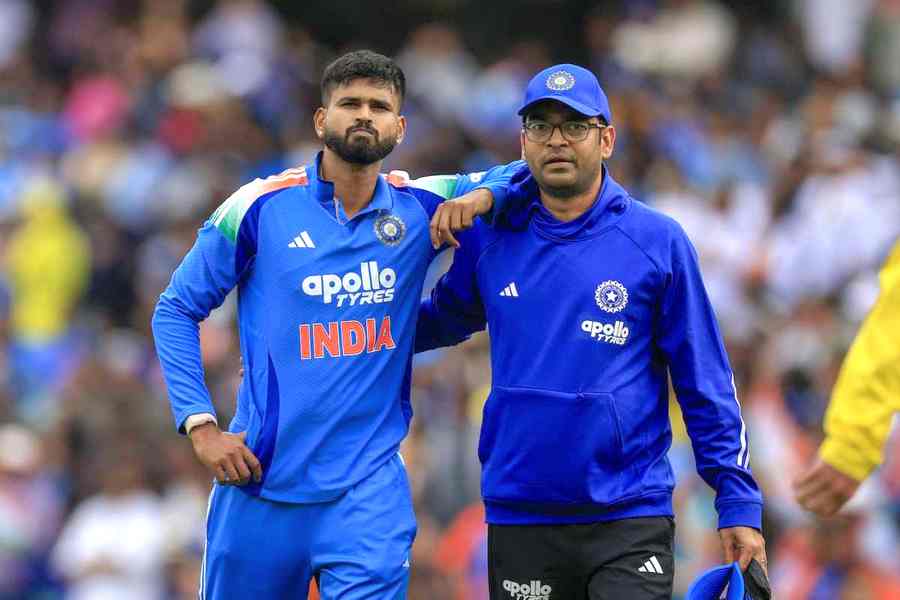
The upcoming three‑match ODI series between India and South Africa has presented a serious selection dilemma: with Shreyas Iyer injured and unavailable, who steps in at No. 4?
Iyer’s absence isn’t just a gap, it’s a chance for India to test balance, form, and future middle‑order stability. This slot has long been critical for India, acting as the bridge between the top order and the lower-middle order, and the choice here could influence team performance for months to come.
Shreyas Iyer has been one of India’s most reliable ODI middle‑order batters. In his ODI career so far, he has played 73 matches, scored 2,917 runs at an average of 47.81, with a highest score of 128*, backed by five centuries and 23 half‑centuries. That kind of consistency, the ability to steady the innings, rotate strike, and accelerate when needed, has made him a backbone in middle overs.
Replacing that kind of reliability isn’t straightforward, especially considering that the senior top‑order slots are largely locked in. This No. 4 spot becomes the real audition ground, and with the 15‑man squad announced, only Tilak Varma and Ruturaj Gaikwad are truly in contention for it.
Read More: Injury Update: Shreyas Iyer doubtful for South Africa ODIs

Tilak Varma — Left-handed option
Tilak Varma offers something India seldom have in the middle order: a left-handed batter. That alone brings tactical variety, different angles, fresh match‑ups for bowlers, and a left-right combination that’s often effective in ODIs. His inclusion gives the batting order a balance many sides look for, and also allows bowlers to be unsettled with constantly changing lines and angles.
Although his senior‑ODI exposure remains limited, in the recent unofficial ODIs for India A vs South Africa A he batted in the top order and showed glimpses of temperament and adaptability.
In the first match he contributed 39 runs off 58 balls in a high-scoring chase, demonstrating calmness against pace and spin. In the second match of the series, he scored 29 runs off 62 balls while chasing, playing a measured innings under pressure.
Tilak’s strokeplay is elegant yet controlled, he drives through the covers, uses the depth of the crease well, and can rotate the strike efficiently, which is exactly what India need in the middle overs.
On top of that, Tilak offers a bit of off-spin as a secondary skill – a flexibility that, while not decisive, could add balance to the side depending on conditions.
Given his left-handed batting, recent match exposure, and all-round potential, Tilak emerges as a real candidate for a middle-order role, a possible long-term No. 4 if he is backed properly.
Read More: Ind vs SA ODIs 2025-26: India squad analysis & probable starting XI

Ruturaj Gaikwad — Experienced, in-form middle-order anchor
Ruturaj Gaikwad’s claim is backed by strong recent performances. In the just-concluded India A vs South Africa A series in Rajkot, he delivered a blazing 117 in the first unofficial ODI, followed by a 68* in the next match – clearly in form and comfortable in 50-over conditions.
His innings were a mix of controlled strokeplay, smart rotation of the strike, and occasional acceleration when required, showing that he can adapt to different match situations.
His overall List-A record speaks volumes: a seasoned campaigner with 4,534 runs at an average of 57.39. That makes him a tested performer rather than a speculative pick. Against South Africa A, he showcased not just skill but temperament, anchoring run chases when the situation got tricky, and handling pressure like a senior pro.
When India need stability, especially if early wickets fall, Gaikwad’s controlled aggression, his strike rotation, and ability to build long innings can prove crucial. His style is methodical, yet he can accelerate seamlessly, which makes him ideal for bridging the top and the lower order.
Read More: Selection errors or rusty ODI execution: What are the causes of India’s series loss in Australia?
What India should do?
Given the demands of the No. 4 slot – balancing anchor duties and acceleration, handling pressure, and offering long-term stability – Ruturaj Gaikwad seems the more dependable choice to start the series.
His recent form, List-A pedigree, and big-match temperament give him a clear edge. Starting him also allows the team to preserve stability in the middle order while keeping options open for Tilak Varma to be blooded in appropriate situations.
However, India must not ignore what Tilak brings – left-handed balance, youth, and versatility. He should get a chance, perhaps not from the very first match but definitely sometime during the series, to test whether he can transition from A-team promise to senior-team performance.
Giving Tilak meaningful exposure now could help India groom a long-term left-handed middle-order option, which adds both flexibility and depth to the batting lineup for future cycles.
With Iyer unavailable, this ODI series isn’t just a temporary fix, it’s a window to rebuild and strengthen India’s middle order again. The three-match ODI series against South Africa starts tomorrow in Ranchi on 30th November, followed by matches in Raipur on 3rd December and Visakhapatnam on 6th December.
Read More: Does Harshit Rana justify his place in India’s XI?

