
Phase-wise T20I batting analysis post T20 WC 2024 — comparing strike rates, averages, and key contributors among Test-playing nations.
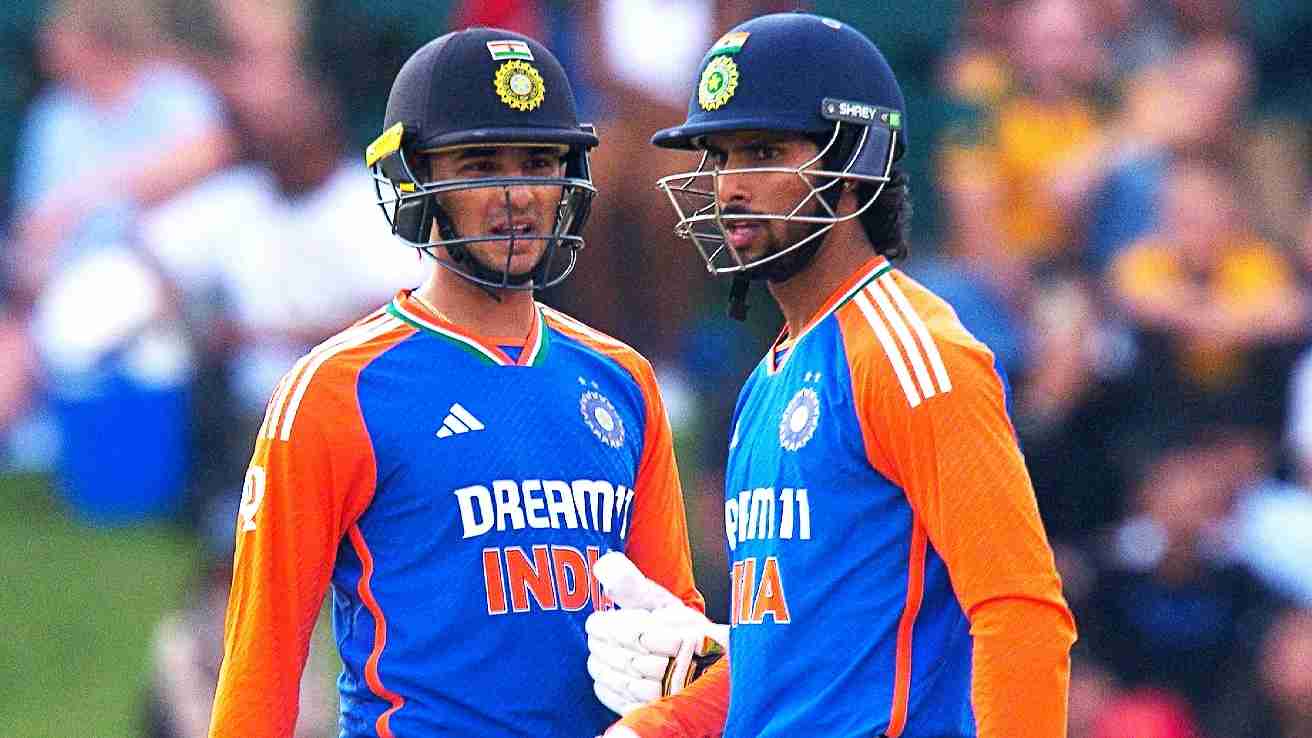
Team India are favourites to win the next edition of the World T20, which is set to begin from February 7, in India and Sri Lanka. India are the defending champions, and since the last World T20, they have been on a roll, holding on to their no. 1 T20I ranking. However, the ranking may not depict the true picture. Let’s look at how the Test-playing nations fare in different phases of a T20I game to determine which is the best team overall since the 2024 World T20.
Powerplay (0-6 Overs)
Powerplay is a crucial aspect of any T20 game. Overs 0 to 6 sees only 2 players positioned in the deep. Hence, batters have the liberty to play attacking shots to maximise the powerplay conditions and collect as many runs as possible.
Read More: Best World XI in T20Is based on current trends
Here’s how each Test-playing nation fares in the powerplay since 2024 World T20.
| Team | Strike rate | Runs | Average | Matches |
| England | 170.50 | 1218 | 34.80 | 20 |
| Australia | 163.20 | 1255 | 31.38 | 22 |
| India | 154.45 | 1977 | 31.89 | 36 |
| Ireland | 142.36 | 410 | 58.57 | 8 |
| New Zealand | 136.73 | 1113 | 38.38 | 23 |
| Sri Lanka | 132.94 | 1340 | 33.50 | 28 |
| Zimbabwe | 131.84 | 1938 | 26.19 | 41 |
| West Indies | 124.43 | 1650 | 27.05 | 37 |
| South Africa | 121.84 | 1272 | 21.20 | 29 |
| Bangladesh | 119.28 | 1460 | 22.46 | 34 |
| Pakistan | 117.03 | 1766 | 22.35 | 42 |
| Afghanistan | 109.41 | 709 | 21.48 | 18 |
England dominate powerplay
If a team’s performance is measured on the basis of strike rate in a T20 game, England win this battle in the powerplay as they boast of the best strike rate of 170.50 followed by Australia (163.20) and India (154.45). However, both England and Australia have played almost half of the games India have played since the 2024 World T20. So, if a minimum requirement of 30 games is considered, India win the powerplay phase, followed by Zimbabwe (131.84) and West Indies (124.43).
In terms of batting average in powerplay, it’s Ireland who are ahead with 58.57, but they have played just 8 games. Leaving Ireland out, New Zealand are ahead with an average of 38.38 followed by England (34.80) and Sri Lanka (33.50).
Pakistan and Afghanistan who are the bottom of this table, both in strike rate and average.
Read More: Basis current form, which teams look to be top contenders for winning T20 World Cup 2026?
Who is the biggest contributor in this phase?
Abhishek Sharma dominates this chart as he boasts of the best strike of 184.48 among Test-playing nation cricketers during the powerplay. Two India batters – Suryakumar Yadav and Shubman Gill – are at the bottom of the chart, as although runs have dried up for them, they have maintained a strike rate of over 140.
*Criteria: Over 0-6 (Minimum 20 games)
| Players | Strike Rate | Average | Matches |
| Abhishek S (IND) | 184.48 | 41.61 | 31 |
| BJ Bennett (ZIM) | 148.16 | 38.30 | 39 |
| Shai Hope (WI) | 145.88 | 67.83 | 24 |
| P Nissanka (SL) | 144.94 | 51.33 | 28 |
| Suryakumar (IND) | 141.67 | 17.00 | 20 |
| Shubman Gill (IND) | 141.13 | 31.82 | 22 |
Middle-overs phase
Middle-overs or overs 7 to 15 is a crucial phase of a T20 game where the batting side consolidate while the bowling side look to stem the flow of runs to put pressure on the batters. Game can make or break during this phase. If batters fail to preserve wickets during this phase, they cannot go all out in the death overs. On the other hand, if bowlers pick up a few wickets during this phase, batting side will struggle to up the momentum.
Here’s how each Test-playing nation fares in the middle-overs since 2024 World T20.
| Team | Strike rate | Runs | Average | Matches |
| Australia | 157.14 | 1606 | 26.77 | 21 |
| India | 144.17 | 2484 | 37.64 | 34 |
| England | 144.09 | 1438 | 26.63 | 19 |
| South Africa | 142.51 | 2132 | 23.96 | 29 |
| New Zealand | 139.06 | 1545 | 24.52 | 22 |
| West Indies | 132.01 | 2433 | 21.92 | 36 |
| Zimbabwe | 125.83 | 2650 | 22.84 | 40 |
| Ireland | 124.77 | 1687 | 24.50 | 8 |
| Pakistan | 123.25 | 2656 | 24.59 | 41 |
| Sri Lanka | 117.81 | 1779 | 26.55 | 28 |
| Afghanistan | 114.30 | 1111 | 23.64 | 18 |
Read More: Abhishek Sharma strikes at a rate of 197.21 in T20Is; What makes him an explosive opener?
Australia rule middle-overs (7-15 Overs)
It’s again Australia, India and England who dominate the top three positions in the middle-overs phase. Australia boast of a strike rate of 157.14 during this phase followed by India (144.17) and England (144.09).
However, if the batting average is considered as another parameter for success in this phase, India wins this battle of supremacy in the middle-overs. They average 37.64 in overs 7 to 15. No other team averages above 27 during this phase. It implies that India have scored more runs while losing fewer wickets during this phase. In other words, they have consolidated during this phase, taking fewer risks, but still striking at around 145. It also proves India have gone hard during this phase, but taken calculated risks, keeping wickets to explode in the death.
Meanwhile, Pakistan and Afghanistan continue to be in the bottom of this table as they struggle to force the pace as fields are spread.

Who are the biggest contributors during this phase?
No surprise that Tilak Varma of India stands among the top two in this table. Tilak has time and again anchored the India innings during the middle-overs while striking close to 140. He comes to bat at no. 3 or 4 and ensures he bats deep to hold the innings together. He averages an impressive 58.88 during this phase, meaning he preserves his wicket in the middle-overs while accumulating as many runs as possible at a good strike rate.
| Players | Strike Rate | Average | Matches |
| BJ Bennett (ZIM) | 138.74 | 30.80 | 20 |
| Tilak Varma (IND) | 136.92 | 58.88 | 20 |
| Shai Hope (WI) | 136.76 | 23.07 | 20 |
| Sikandar Raza (ZIM) | 129.21 | 26.33 | 33 |
*(Minimum: 20 matches)
Death overs (16-20 Overs)
Death overs can change the momentum of the game. If the batting side accelerates well, they can add up 20 to 30 extra runs to the total that can be the difference between winning and losing. Meanwhile, if the bowling side restrict the opposition to 6 to 8 runs per over during this phase, the momentum will be on their side.
Here’s how each Test-playing nation fares in the death-overs since 2024 World T20.
| Team | Strike rate | Runs | Average | Matches |
| Afghanistan | 163.53 | 816 | 20.92 | 18 |
| India | 163.20 | 1286 | 18.37 | 30 |
| England | 159.31 | 693 | 19.25 | 17 |
| West Indies | 155.25 | 1346 | 16.62 | 33 |
| Zimbabwe | 153.43 | 1433 | 14.62 | 36 |
| New Zealand | 153.40 | 721 | 16.39 | 18 |
| Pakistan | 150.97 | 1475 | 14.75 | 38 |
| Ireland | 146.25 | 351 | 16.71 | 8 |
| South Africa | 143.19 | 935 | 14.17 | 26 |
| Bangladesh | 141.38 | 1165 | 15.96 | 32 |
| Australia | 137.18 | 476 | 14.88 | 17 |
Afghanistan tops, Australia at bottom
The data during this phase show jaw-dropping information. Afghanistan, who were in the bottom of the table during powerplay and middle-overs, top the chart in death overs as they boast of a strike rate of 163.53. India are placed second with a strike rate of 163.20 followed by England’s 159.31. However, astonishingly, Australia, who are in top three in the first two phases of this format, are at the last position in death overs. They have the lowest strike rate of 137.18 in death overs. It implies Australia run out of gas once they reach the death overs. Either they don’t have enough power-hitters in the lower-order to maximise the death overs or look to win the match in the first 15 overs itself and hence, they do not need to go all out in the death overs. This is an area where Australia need to work on ahead of the 2026 World T20.
Read More: Hardik Pandya indispensable for India in T20 World Cup 2026

Who are the biggest contributors during this phase?
| Players | Strike Rate | Average | Matches |
| Sikandar Raza (ZIM) | 207.44 | 31.38 | 13 |
| Tilak Varma (IND) | 179.83 | 53.50 | 11 |
| M Santner (NZ) | 179.10 | 24.00 | 10 |
| Ryan Burl (ZIM) | 178.23 | 26.20 | 15 |
| Hardik Pandya (IND) | 176.92 | 28.11 | 12 |
* Minimum: 10 matches
All-rounders dominate this phase as they come to bat lower down the order and get on with big hitting straight away to create winning moments for their team. Sikandar Raza tops the list with a strike rate of 207.44. Other all-rounders include Mitchell Santner of New Zealand, Ryan Burl of Zimbabwe and Hardik Pandya of India.
However, the exception is batter Tilak who takes his game a notch higher in this phase, jumping from a strike rate of 140 in middle-overs to 180 in the death overs. He averages 53.50 in this phase, showing how invaluable a player he is for India.
Final Verdict
India have dominated all the three phases of a T20I game as they have followed the mantra of going big from the word go, never letting the foot off the pedal across all the three phases of the game. Their aggressive batting style has worked for them.
Read More: India’s T20I Juggernaut Rolls On: The Secret Behind Their Unstoppable Run

