
What’s going wrong for Abhishek Sharma? Back-to-back ducks raise concerns over approach and temperament in T20 World Cup 2026.
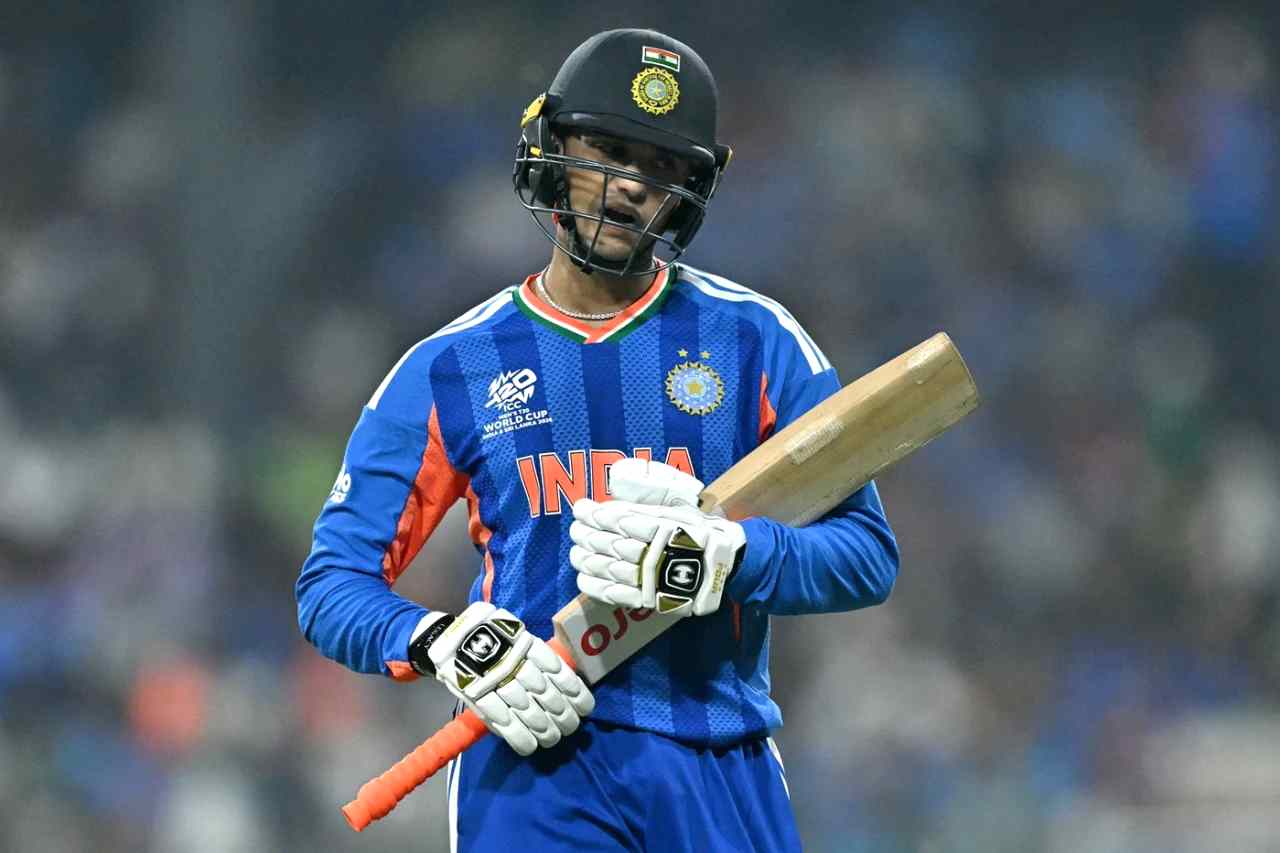
Abhishek Sharma came as a threat, the most dangerous one, the world No. 1 T20I batter with a strike rate that terrorized attacks. But three consecutive ducks have turned promise into puzzle, exposing India’s vulnerabilities in the group stage against USA, Pakistan, and Netherlands.
The opener’s form heading into the T20 World Cup 2026 was blistering, particularly in the recent five-match T20I series against New Zealand in January 2026. He amassed rapid fifties, including 84 off 35 balls in Nagpur (strike rate 240) and a sensational 68 off 20 in Guwahati, the second-fastest T20I fifty by an India batter at a 340 strike rate. These knocks powered India to a 4-1 series win, showcasing his powerplay dominance with sheer aggression.
Since the T20 World Cup 2024, Abhishek has been among India’s top T20I run-scorers, ranking first in terms of runs and sixes, with an elite strike rate that no peer matched. His ascent included retaining the ICC No 1 T20I batter spot after the 2025 Asia Cup, peaking at 931 rating points was a historic high. This contrast amplifies the shock – a batter who dismantled New Zealand now waits for his first run in the tournament after facing just eight balls total in three games.
Read More: Top 5 power-hitters to watch out for in T20 World Cup 2026
Three ducks dissected
Abhishek’s nightmare began in India’s opener against USA on February 7 at Wankhede Stadium, Mumbai. Promoted as the “key player” USA feared, he fell for a golden duck in the second over to pacer Ali Khan, courtesy of a length ball outside off that he flat-batted straight to deep cover fielder Sanjay Krishnamurthi. The tactical field set by skipper Monank Patel snared him early, silencing the home crowd.
Next, in the high-stakes Group A clash versus Pakistan on February 15 at R Premadasa Stadium, Colombo, Pakistan captain Salman Ali Agha, a non-regular new-ball bowler, opened with off-spin on a tacky pitch. Abhishek could only manage a four-ball duck, miscuing a short sliding delivery angled at the stumps to mid-on where Shaheen Afridi caught it. Agha’s gamble exploited conditions, removing the threat before he settled, leaving India 1/1.
The streak peaked against Netherlands on February 18 at Narendra Modi Stadium, Ahmedabad. Facing off-spinner Aryan Dutt in the opening over, with India batting first, Abhishek departed for a three-ball duck after attempting to pull a short delivery that analysts later described as “one to hit.” The left-handed batter became the third player after West Indies’ Andre Fletcher and Uganda’s Roger Mukasa to record three consecutive ducks in the ICC Men’s T20 World Cup.
Opposition’s scouting mastery
Opponents have done meticulous homework on Abhishek Sharma, treating him as India’s prime danger. Pakistan’s Salman Agha deviated from norms, using spin upfront to cramp his off-side game, his favoured zone, on a gripping surface. USA’s Ali Khan targeted with length balls outside off, inducing the lofted mishit via deep fields.
Netherlands went further, requesting Gujarat Cricket Association for a left-handed net batter to drill counters for Abhishek and Ishan Kishan. Eventually, Gujarat captain Manan Hingrajia made himself available.
Aryan Dutt’s short ball exploited this preparation, bowling him as he freed arms prematurely. Common thread: deliveries “inside” or cramping lines deny room, forcing cross-line risks where he is vulnerable to spin. In three innings, he’s faced just eight balls – too few to adapt.
Read More: Best openers in T20 WC 2026: Abhishek-Ishan/Buttler-Salt/Seifert-Allen/Markram-De Kock/Head-Inglis?
Weight of expectations
Batting legend Sunil Gavaskar pins the slump on “weight of expectations” as the team’s six-hitter and No. 1 opener. “Abhishek is a lovely guy. If he had gotten a flying start in the first game, things might have been different. But now, you can sense that the expectations of being the big guy, the six-hitter, the No. 1 batter in the team, might be weighing heavily on him,” Gavaskar said on Star Sports.
This rings true, Abhishek’s outings show premeditated aggression backfiring against prepared attacks. Post T20 WC 2024, his flair thrived in bilaterals like against New Zealand (high strike rates), but multilateral pressure exposed the gap.
Path to redemption
More net time is key, Gavaskar advises, to “deceive the opposition” when scouted, practicing counters to inside lines and early spin. Technical tweaks could include straighter bats against cramps, rotating strike early.
India’s depth — evident in the Suryakumar Yadav-led side topping the group despite the setbacks — affords them some breathing room. However, the Super Eights clash against South Africa calls for an immediate bounce-back.
As knockouts loom, Abhishek’s character faces a test. From New Zealand destroyer to duck magnet, his ability to reset, forget hype, rebuild innings, will define top-tier status.
That’s 3 in row! #T20WorldCup #abhishek
— Ashwin 🇮🇳 (@ashwinravi99) February 18, 2026
Cruel game this sometimes. Chin up lad☺️
Importantly, I would argue that even if a player peaks later in a tournament like this, it’s fine. As a batter, you find yourself lacking in inner endurance and stamina after food poisoning. Abhishek will continue to be the X-factor in Super 8s. Chin up young lad! #T20WorldCup
— Priyank Panchal (@PKpanchal09) February 18, 2026
Read More: T20 World Cup 2026: Tilak Varma’s strike rate cause of concern

