
T20 World Cup 2026: Tilak Varma’s strike rate of 120.5 raises questions about tempo and intent in India’s middle-order approach.
India entered the T20 World Cup 2026 with one of the most balanced batting line-ups in the tournament, and Tilak Varma was expected to play a crucial role in the middle order. After a highly productive 2024 and a solid 2025 season, the young left-hander had established himself as a reliable aggressor capable of shifting gears and maintaining tempo during the middle overs.
However, as the tournament progresses, questions are beginning to surface – not about his talent, but about his scoring rate at a stage where momentum often decides matches.
Tilak Varma arrived at the 2026 T20 World Cup riding a hot streak. Across the 2024-25 T20 calendar, he scored aggressively and consistently (year-by-year strike-rates around the 140s), making him one of India’s most valuable middle-order hitters.
But the numbers from the World Cup so far are a clear red flag: Varma’s tournament strike-rate has dropped markedly compared with his recent baseline, and that slowdown in the middle overs is beginning to cost India real momentum.
Read More: Ishan Kishan 2.0 a different beast to handle; proves his worth in tricky conditions at Premadasa
What numbers say and why do they matter?
Put simply, Varma’s strike-rate has fallen from roughly mid-140s (2024–25) to 120 in the ongoing 2026 T20 World Cup. That’s a meaningful drop.
At No. 3 (or in the upper middle order), Varma’s role is to bridge the powerplay and the death overs: rotate when required, accelerate when set, and keep the momentum alive so the late overs can be explosive. A strike-rate around 140 across the lead-up years showed he was doing exactly that.
However, a tournament strike-rate of 120 signals that he’s getting starts but not turning them into the quick, momentum-shifting knocks that India need in tight contests.
Tilak Varma’s T20I form in 2024 & 2025
| YEAR | INNS | RUNS | AVG | STRIKE RATE | HS | 50s/100s |
| 2024 | 5 | 306 | 102 | 187.7 | 120 | 2/0 |
| 2025 | 18 | 567 | 47.3 | 129.2 | 73 | 4/0 |
The numbers from 2024 and 2025 underline just how impactful Tilak Varma was in the lead-up to the T20 World Cup 2026. In 2024, he was at his explosive best, striking at an outstanding 187.7 and registering two centuries, which highlighted his ability to dominate bowling attacks.
Although his strike rate dipped slightly in 2025, he still maintained a healthy 129.2 across 18 innings while averaging 47.3 — figures that reflected both consistency and attacking intent. Across these two years, Tilak established himself as a dynamic middle-order batter capable of accelerating the innings while also anchoring when required.
Read More: T20 World Cup 2026, IND vs PAK: Kishan smothers Pak’s hyped spin attack; India through to Super 8

Tilak Varma’s T20 World Cup 2026 performance so far
| YEAR | INNS | RUNS | AVG | STRIKE RATE | HS | 50s/100s |
| 2026 (WC) | 4 | 106 | 26.5 | 120.5 | 31 | 0/0 |
However, the 2026 T20 World Cup has told a different story so far. In four innings, he has scored 106 runs at a strike rate of 120.5, a noticeable decline from his previous standards. While he has contributed useful runs, the drop in scoring tempo — particularly in the middle overs has raised concerns about momentum and role clarity within India’s batting lineup.
Bangar weighs in on Tilak’s batting stance
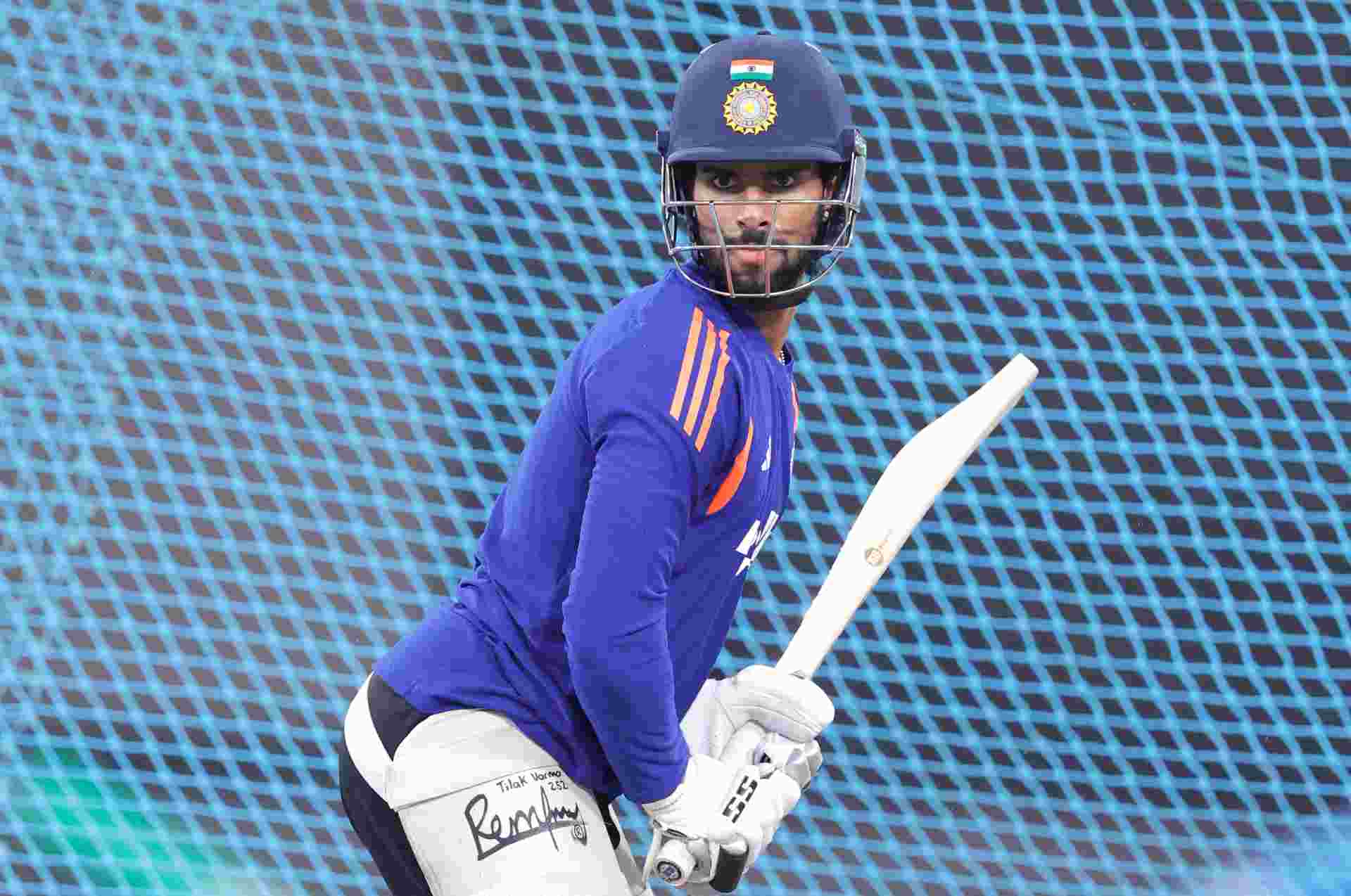
There has also been a technical angle to the discussion. In a recent interaction with ESPNcricinfo, former India batting coach Sanjay Bangar pointed out that Tilak’s slightly side-on stance could be limiting his ability to access certain scoring areas consistently in T20 cricket, particularly straight down the ground or against balls on middle-and-leg and wide outside off.
Bangar noted that while Tilak has improved significantly against express pace by getting inside the line and using the leg-side boundary, modern T20 batting often benefits from a slightly more open stance, which allows players to free their arms and hit straighter with a flatter bat.
That said, Bangar stopped short of calling it a flaw, emphasising his faith in Tilak’s temperament and ability. Still, in a World Cup setting where margins are minimal, even small technical nuances can influence scoring tempo.
Read More: T20 World Cup 2026: Why rest of the teams need to be cautious against India’s fiery batting line up
Technical tweaks & tactical adjustments India must consider
If there is even a minor technical setback that comes in the way of Tilak Varma’s scoring range, the management cannot afford to overlook it at this point in a World Cup. A slightly more reclined posture – as is proposed in the wider technical discussion – would enable him to reach straight boundaries and free his arms against length balls, especially on slower surfaces where it becomes difficult to generate power. Driving directly down the ground regularly is also very important in T20 cricket, particularly when bowlers deny width and stuff the leg side.
Other than stance, role clarity is also essential. Tilak must make early decisions whether to build or to accelerate; he can accomplish only a few things by attempting to build and at the same time accelerate simultaneously.
Better bowlers’ rotation with spin, picking off select bowlers instead of whole overs, and making more percentage classic shots instead of improvising would assist in regaining his scoring rate. On subcontinental pitches, where timing is more of an issue than brute force, quick singles and regulated boundary choices are frequently more successful than forced big hits.
India’s middle overs cannot afford prolonged slow phases, particularly against stronger Super Eight opponents. Tilak Varma remains a high-quality player with proven ability, but in a World Cup environment, evolution must be immediate. Raising his strike rate even by 10–15 points could significantly enhance India’s batting rhythm, and that adjustment may prove decisive in knockout cricket.
Final words
This is a World Cup, where margins are thin and tempo defines outcomes. Tilak Varma has the talent, but he must quickly adapt – improve his strike rotation, choose the right balls to attack, and maintain momentum in the middle overs. India cannot afford stagnation at No. 3. A sharper, more decisive Tilak could make all the difference in the knockout stages.
Read More: T20 World Cup 2026, IND vs NED: Shivam Dube, Varun Chakravarthy help India sweep group stage

