

T20 World Cup 2026: With just 89 runs in seven innings, should India consider dropping Abhishek Sharma in the Final?

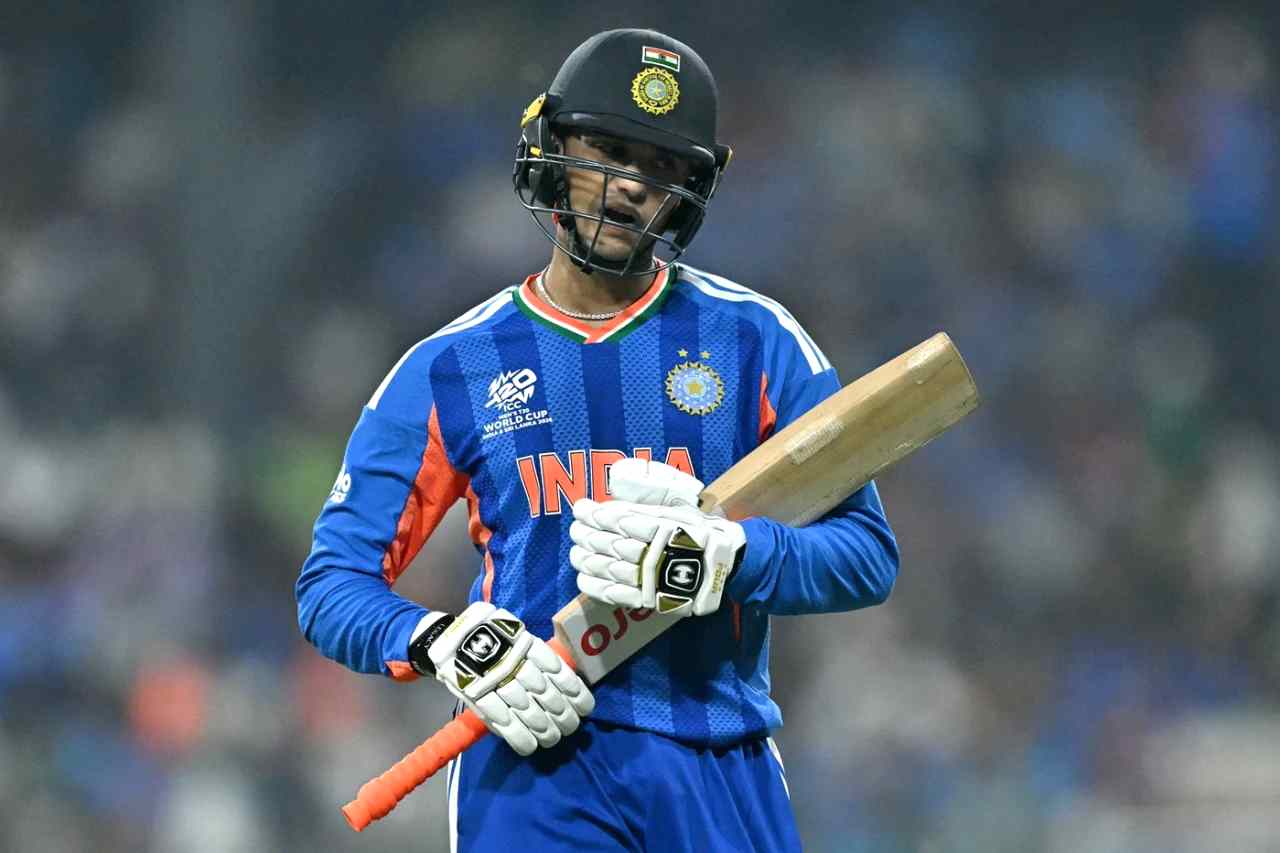
0, 0, 0, 15, 55, 10, and 9—a tally of just 89 runs at an average of 12.71. For a player who entered the ICC Men’s T20 World Cup 2026 as the world’s top-ranked T20I batter, these figures are a statistical anomaly that has sparked a nationwide debate.
As India prepare for the high-stakes final against New Zealand at the Narendra Modi Stadium in Ahmedabad, the central question looming over the team hotel is whether the “X-factor” potential of Abhishek Sharma still outweighs his current liability at the crease.
Great divergence
To understand the frustration of fans and experts alike, one must look back at the trail of destruction Abhishek left in his wake just months ago. Before the World Cup, he was the undisputed architect of India’s aggressive T20 blueprint.
Abhishek Sharma entered the T20 World Cup 2026 as India’s premier T20I opener, boasting a strike rate of around 194 and an average near 37, with records for most sixes and boundaries in recent innings. He redefined aggressive T20 batting for India, hitting boundaries every 3.2 balls and leading in fifties while holding the No 1 ICC T20 batting ranking.
However, in the tournament’s seven innings, his strike rate dipped to 130.88, with just one fifty and three ducks exposing vulnerabilities against quality attacks.
Pre-World Cup, Abhishek’s firepower, highlighted by a 100+ partnership with the highest run-rate for India, made him indispensable. In contrast, facing top teams in the World Cup, he has crumbled under pressure more often than not.
Read More: T20 World Cup 2026 Final, IND vs NZ: How will India stop Seifert & Allen in Ahmedabad?
Pattern of dismissals
The most concerning aspect for India’s think tank isn’t just the lack of runs, but the repetitive nature of his exits. Opposing captains have clearly done their homework, mapping out a technical vulnerability that has been exploited repeatedly. Abhishek has looked visibly cramped for room, struggling when bowlers target his body or take the pace off.
In the semi-final against England at the Wankhede, he fell for 9 off 7 balls. After hitting two boundaries, a “headless” rush of blood saw him attempt a flick against the off-spin of Will Jacks, only to mistime it to deep midwicket.
This marked the third time in the tournament he had fallen to spin. Earlier, he was undone by Salman Ali Agha (Pakistan), Aryan Dutt (Netherlands), and Akeal Hosein (West Indies). His inability to rotate strike or adjust his bat speed against the turning ball has turned him into a predictable target.
This technical stagnation has drawn a sharp critique from the legendary Sunil Gavaskar. Speaking to India Today ahead of the final, Gavaskar was blunt in his assessment, “It’s a very tough call. Abhishek Sharma is the No. 1 batter in the ICC T20 rankings, but he hasn’t learned from his dismissals. He keeps getting out in the same region where his arms are cramped for room. Bowlers are targeting that area and forcing mistakes. My concern is that he either hasn’t adjusted yet or is unable to change his approach.”
Abhishek’s match by match performance:
| Match / Stage | Opponent | Runs (Balls) | Boundaries |
| Group Stage | USA | 0 (1) | — |
| Group Stage | Pakistan | 0 (4) | — |
| Group Stage | Netherlands | 0 (3) | — |
| Super Eights | South Africa | 15 (12) | 2 fours, 1 six |
| Super Eights | Zimbabwe | 55 (30) | 4 fours, 4 sixes |
| Super Eights | West Indies | 10 (11) | 2 fours |
| Semifinal | England | 9 (7) | 2 fours |
Read More: T20 World Cup 2026 Final, IND vs NZ: Pitch Report


Should Abhishek Sharma be dropped?
The decision to bench a world number one-ranked batter before a final is a move that could define Gautam Gambhir’s coaching tenure and Suryakumar Yadav’s captaincy. Currently, the management seems split between two schools of thought.
The primary argument for retention is pure firepower. With a lineup featuring Sanju Samson, Ishan Kishan, and Suryakumar Yadav, Abhishek’s presence ensures India never takes the foot off the gas. If he clicks, he can win the game in the first six overs.
Proponents of this view point to “The Josh Buttler Precedent”, elite players often struggle through a tournament only to deliver a match-winning performance in the final. The belief is that Abhishek doesn’t need a technical overhaul; he needs a “mindset change” and the security of knowing his spot is safe.
The counter-argument is based on hard facts. An average of 12.71 is difficult to justify in a final where every wicket is gold. Replacing him with a player like Rinku Singh would provide India with much-needed middle-order stability and tactical depth.
While the team management prefers a “batter-heavy” approach for big games, the inclusion of an extra bowling option or a more consistent anchor could prevent the top-order collapses that have haunted India in past ICC knockouts.
If Abhishek does walk out to open in Ahmedabad, it will be because of the unwavering support of the current leadership. Captain Suryakumar Yadav has cultivated a “back your players to the core” culture, a philosophy recently validated by Sanju Samson.
Despite mounting external pressure to drop Samson after a string of low scores earlier in his career, the management persisted. Samson eventually repaid that faith by delivering in a “crunch game” during the Super Eights, proving that confidence can be a more potent weapon than current form.
However, a World Cup final is not a regular series. It is a game of margins. Every ball Abhishek survives without scoring, and every repetitive dismissal, adds pressure to a middle order that cannot afford to start their innings in the fourth over every match.
Read More: T20 World Cup 2026: Low-down on Ahmedabad track in this tournament


