

BCB refuse Bangladesh tour to India for T20 World Cup 2026 even after ICC approval, raising questions over participation and scheduling.

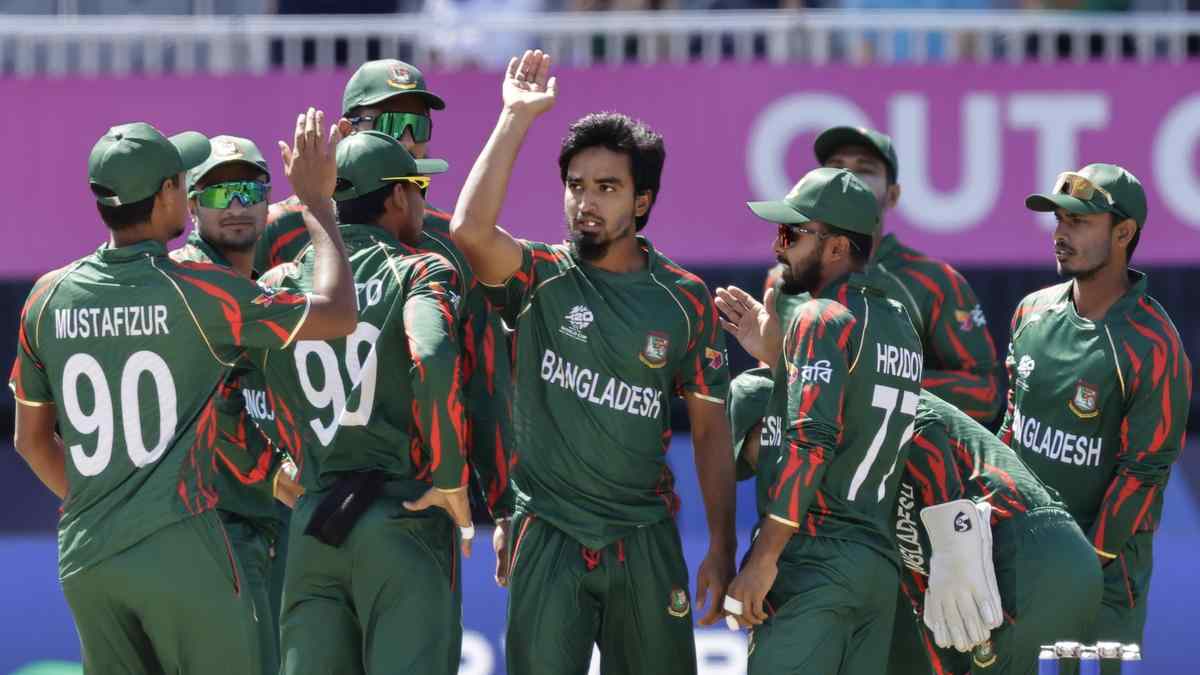
Tensions between the Bangladesh Cricket Board (BCB) and the International Cricket Council (ICC) escalate over Bangladesh’s participation in the India-Sri Lanka co-hosted Men’s T20 World Cup 2026, despite the ICC deeming security risks low. The BCB remains resolute in refusing to send its team to India for scheduled matches, rooted in the recent Mustafizur Rahman IPL controversy and broader bilateral strains.
The saga ignited a few days back when the Board of Control for Cricket in India (BCCI) directed Kolkata Knight Riders (KKR) to release Bangladesh pacer Mustafizur Rahman from their IPL 2026 squad, who bought him for INR 9.20 crore. No official reason emerged from the BCCI, but it was fuelled out of protests in India against Bangladesh, regarding widely reported killings of members of the Hindu minority in the eastern neighbour country.
BCB director Khaled Mashud Pilot questioned India’s security capabilities, stating, “If they cannot provide security to one of our players, how will they ensure security of our entire team?” This prompted the Bangladesh government to ban IPL broadcasts and the BCB to formally notify the ICC of its refusal to travel for World Cup games in India.
Read More: KKR release Mustafizur on BCCI instructions; have been allowed replacement player
ICC’s security green light
The ICC countered with a detailed security assessment shared on January 11, concluding no specific or heightened threat exists to the Bangladesh team, officials, or venues in India. Risks were rated “low to moderate” at some sites like Kolkata’s Eden Gardens and “low to nil” at others, aligning with global standards for major events and insufficient grounds for relocation.
“The ICC’s independent risk assessments, carried out by internationally recognised security experts, do not conclude that Bangladesh cannot play its scheduled matches in India,” an ICC source was quoted by TOI as saying. Bangladesh’s sports head Asif Nazrul objected to ICC validation of risks, but the global body firmly denied this, clarifying no direct threats were identified.
What happened in video conference?
A crucial video conference on January 12, featured BCB president Aminul Islam, vice presidents Shakawath Hossain and Faruque Ahmed, cricket operations chairman Nazmul Abedeen, and CEO Nizam Uddin Chowdhury representing Bangladesh. ICC representatives urged reconsideration, noting the finalised itinerary, but specifics on ICC participants like chairman Jay Shah remain unconfirmed in reports.
Post-call, BCB issued a statement: “During the discussions, the BCB reaffirmed its position regarding the decision not to travel to India, citing security concerns… The board’s position remains unchanged.”
Read More: Alyssa Healy to bow out from cricket after home series against India
T20 World Cup 2026: Bangladesh’s slate
The ninth Men’s T20 World Cup runs from February 7 to March 8, 2026, across India and Sri Lanka with 20 teams and 55 matches. Bangladesh, in Group C alongside England, West Indies, Nepal, and Italy, faces four group-stage fixtures, all in India – West Indies (Feb 7, Eden Gardens, Kolkata, 2.30 PM IST), Italy (Feb 9, Eden Gardens, 10.30 AM), England (Feb 14, Eden Gardens, 2.30 PM), and Nepal (Feb 17, Wankhede Stadium, Mumbai, 6.30 PM).
The top two per group advance to Super 8s. The semis on March 4-5, and final on March 8 will be played in Ahmedabad. With six weeks until the opener, relocation remains possible but challenging given the fixed schedule.
BCB’s persistent concerns
BCB’s grandstanding stems from perceived threats to players and fans, amplified by Mustafizur’s release and government advisories on “prevailing situation” safety issues.
Despite ICC assurances, BCB views low-moderate risks as unacceptable, especially post-IPL fallout, and seeks neutral venues to protect its contingent. Asif Nazrul led demands, arguing against India-hosted games amid “violent communal policy” claims, though ICC rebuttals highlight standard protocols.
This standoff underscores fraying India-Bangladesh cricket ties, once vibrant with bilateral series and shared subcontinental passion. Mustafizur’s ouster symbolises deeper political frictions spilling into sport, with Bangladesh banning IPL telecasts nationwide.
Implications for global cricket
While ongoing dialogues seem to offer no hope, but BCB’s intransigence tests ICC neutrality amid host nation leverage. Relocating four matches disrupts logistics for broadcasters, sponsors, and fans expecting Eden Gardens fireworks, Kolkata’s historic venue that hosted the 2016 final.
On the other hand, Bangladesh has points forfeiture or penalties on risk, denting associate growth in expanded 20-team format.
Read More: ODI cricket: What are the observed & expected consequences of usage of one ball after 34th over?


