

Evaluating Ajit Agarkar’s tenure as India’s chief selector — key decisions, successes, setbacks, and overall impact on the national team.

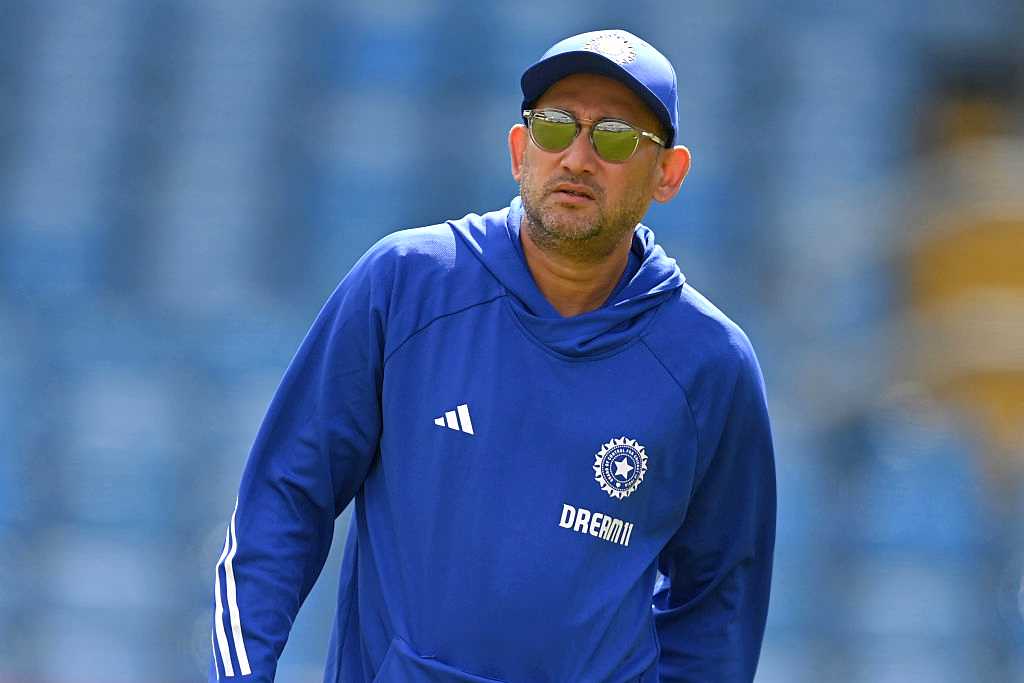
When former India pacer and birthday boy Ajit Agarkar, born on December 4, took over as Chairman of the Senior Men’s Selection Committee on July 4, 2023, Indian cricket stood at a crossroads. Agarkar, with his reputation for straight thinking and understated steel, was seen as the man to bring clarity to the maze after the 2022 transition phase.
Two and a half years down the line, there’s little doubt he made a mark. Under his watch, India became a white-ball powerhouse and global champion again. Yet, the same tenure also oversaw one of India’s most unsettled periods in Test cricket in the past decade. His report card, therefore, is a mix of brilliance and blemishes, and can be termed as a story of dazzling peaks and disconcerting troughs.
Read More: Gautam Gambhir’s record as head coach has more reds than expected
White-ball renaissance
Agarkar’s biggest win came not through rhetoric but through results. In ODIs, India’s record under his selection panel stands at 30 wins and 9 losses, while the T20I side boast a staggering 45 wins and just 9 defeats.
More than the numbers, it’s the consistency that stands out. India reached the finals of every major ICC event since his appointment, from the 2023 ODI World Cup to the T20 World Cup 2024 and the Champions Trophy 2025, and crucially, went on to win two of them. Those trophies ended a long drought and restored India’s swagger in world cricket.
The hallmark of Agarkar’s white-ball tenure was selection clarity. He resisted the temptation to tinker excessively and backed combinations built on role definition. When form demanded change, he didn’t hesitate to spring a bold surprise.
The selection of Varun Chakravarthy in the ODI setup ahead of the Champions Trophy was unconventional but visionary as the mystery spinner’s clutch performances became key to India’s triumph.
Similarly, Agarkar’s approach to the T20 transition was forward-looking. Instead of shielding young talent behind seniors’ shadows, he unleashed the likes of Rinku Singh, Tilak Varma, and Abhishek Sharma, players who have since shaped India’s renewed T20 identity.
The results speak for themselves. India not only lifted the 2024 T20 World Cup but followed it up with a dominant Asia Cup double, winning one each in the ODI and T20I formats.
Credit must also go to how Agarkar retained harmony between selectors and team management, a feat not always achieved in modern Indian setups.
The outcome has been a cohesive white-ball ecosystem that extends beyond the playing XI. Team India also boast a bench so robust that missing established stars hardly dents performance. In short, white-ball cricket has been Agarkar’s crowning achievement, an era of conviction replacing confusion, and of hardware finally matching hype.
Read More: How WTC 27 Table looks after Guwahati Test? Are India virtually out of running for the WTC final?
Red-ball regression
However, the story darkens when the whites come out. India’s Test cricket under Agarkar’s tenure has flirted with mediocrity and inconsistency. The record – 13 wins, 12 losses, and 3 draws, may not look alarming at first glance, but context reveals a decline in standards.
India suffered two home Test series whitewashes, a very ugly sight for a team that once prided itself on fortress-like dominance. Away from home, promising starts fizzled into indifferent finishes, culminating in failure to qualify for the 2025 World Test Championship Final.
The years between 2023 and 2025 saw a cluster of legendary retirements too, four senior stalwarts bowed out within months, leaving gaping holes in experience and leadership. Rather than a phased handover, the exits felt abrupt and reactive, a sign of poor transition planning. Notably, the four stalwarts are – Virat Kohli, Rohit Sharma, Cheteshwar Pujara, and Ravichandran Ashwin.
Then came selection inconsistencies. Despite strong domestic performances, players like Sarfaraz Khan and Abhimanyu Easwaran found themselves on the periphery, victims of the “musical chairs” trend that defined India’s middle-order shuffle.
Every series brought a debutant; few survived long enough to settle. The messaging from selectors appeared muddled, form and promise were often trumped by familiarity and hierarchy.
Perhaps the most telling void remains at No. 3, a spot India haven’t filled since Cheteshwar Pujara’s departure. Agarkar’s panel experimented with Shubman Gill, Sai Sudharshan, and domestic hopefuls, but no long-term answer emerged. Instead of grooming a specialist, India relied on floating options.
The situation with fast-bowling prospects was similar. Despite the BCCI’s concerted push to expand the pacer pool, there has been no coherent roadmap to integrate talents like Mayank Yadav, Mukesh Kumar, or Umran Malik seamlessly into the fold. Squads were rotated frequently, but the lack of continuity prevented a settled pace unit from forming.
All of this indicated a broader absence of long-term Test vision. The Agarkar committee’s white-ball model, structure, foresight, and clarity, seemed curiously absent in the red-ball scheme. The result is a Test side struggling to keep up with their own legacy.
Ajit Agarkar’s legacy as chief selector can be summed up in one sentence: he gave Indian cricket new wings but left their backbone fragile. The flight in limited-overs formats has been exhilarating. Yet the red-ball descent reminds that great teams need not just imagination, but endurance.
Read More: Are India’s selection calls in Tests mostly dictated by IPL? Has Ranji Trophy become redundant?


